
President Trump is once again reminding the world that American diplomacy comes with teeth. On Wednesday, the president issued a blunt warning to Iran, telling its leadership to “come to the table” as the United States moves a powerful naval force into the region. The message was unmistakable. Talk is preferred, but refusal has consequences.
Trump confirmed the deployment of the USS Abraham Lincoln and its strike group, describing it as a deliberate signal to Tehran. In a Truth Social post, the president said a “massive Armada” was heading toward Iran, larger than the force previously sent to Venezuela and fully capable of carrying out its mission with speed and violence if necessary. This was not subtle language, and it was not meant to be.
BREAKING; IRAN Deploys its Drone Carrier Off Bandar Abbas as Spy Drones Shadow USS Abraham Lincoln!!
The Iranian drone carrier IRIS Shahid Bagheri (also referred to as Shahid Bahman Bagheri) has indeed been spotted anchored approximately 5 km south of Bandar Abbas (often… pic.twitter.com/e5w2zDhWIH
— Global Surveillance (@Globalsurv) January 28, 2026
The president made clear that diplomacy remains his first choice, but only on American terms. Trump reiterated that any deal must result in zero nuclear weapons for Iran and be fair to all parties involved. He also reminded Tehran of the cost of ignoring him in the past, referencing “Operation Midnight Hammer,” which he described as a major destruction of Iran after it previously refused to negotiate. Trump warned that the next attack would be far worse and urged Iranian leaders not to repeat their mistake.
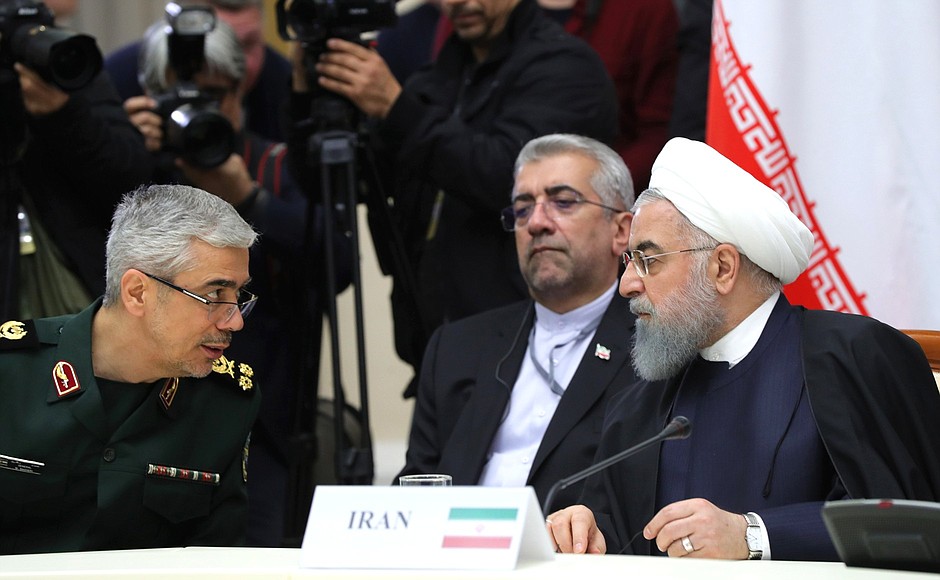
Iran’s response was predictably defiant. Its mission to the United Nations fired back within hours, invoking America’s past wars in Afghanistan and Iraq and claiming Iran stands ready to defend itself if challenged. The statement tried to sound reasonable by mentioning dialogue, but it also threatened to respond “like never before” if pushed. This is the same regime rhetoric the world has heard for decades, loud words paired with victimhood and blame shifting.
President Trump, however, suggested Iran’s bluster is masking pressure. In a recent interview, he said Tehran has been reaching out repeatedly as the U.S. military presence grows. According to Trump, Iran wants to talk and has contacted the United States multiple times. That lines up with reports that any agreement would require Iran to dismantle its enriched uranium stockpile, curb its missile program, end support for proxy forces, and stop independent uranium enrichment, conditions Iranian leaders have resisted for years.
The USS Abraham Lincoln entered U.S. Central Command waters on Monday, marking a significant escalation in presence. This show of force comes at a fragile moment for Iran internally. Nationwide protests that began in late December have spread rapidly, triggering a violent crackdown by the regime. Human rights groups report thousands of deaths tied to the unrest, with many more cases still under investigation.
Reports also indicate Supreme Leader Ayatollah Ali Khamenei has retreated to a fortified underground facility as pressure mounts both at home and abroad. That detail alone speaks volumes about the regime’s confidence.
President Trump’s strategy is simple and unapologetic. Peace through strength is not a slogan, it is policy. Iran can negotiate, or it can test American resolve again. Trump has made it clear how that ends, and this time, he says, the clock is ticking.

The cowardly goat humper is hiding like the cockroach that he is! How come all these cowards don’t lead from the front? They’re all gum flappers, just like the corrupt UN!