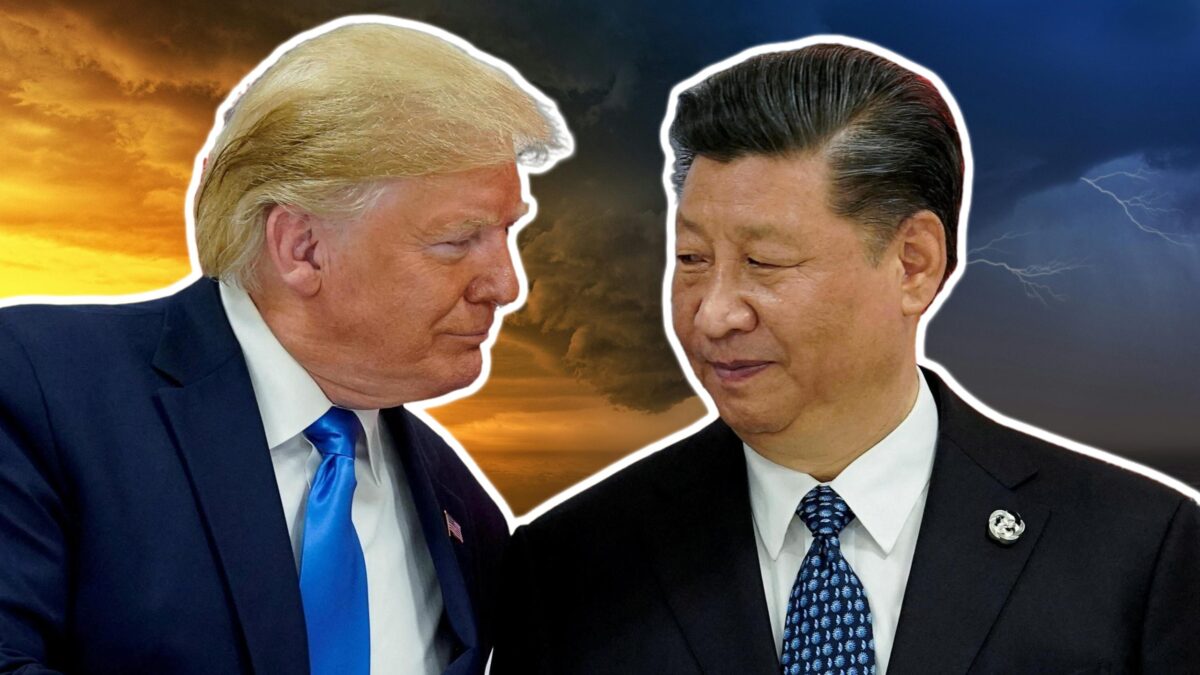

China’s Defense Ministry wasted no time blasting the United States after the joint U.S.–Israeli strikes on Iran, labeling America a “war addict” in remarks that were quickly amplified by state linked social media accounts.
At a press conference in Beijing, a Chinese Defense Ministry spokesman declared, “The U.S. is a war addict. Throughout its over 240-year history, it has been at war for all but 16 years.” He went further, claiming, “The U.S. has 800 overseas military bases in over 80 countries and regions. The U.S. is the main cause of international disorder, global turbulence, and regional instability.”
That is quite a lecture coming from the Chinese Communist Party.
State run outlet China Daily followed up with an editorial accusing the United States and Israel of ignoring international law and engaging in “increasing belligerence.” The paper warned that “unilateral military adventurism” would “breed chaos” and spark a cycle of retaliation. It even floated the theory that the strikes were motivated by “domestic political calculations,” suggesting President Trump and Israeli Prime Minister Benjamin Netanyahu were seeking to boost their poll numbers through external confrontation.
Meanwhile, China’s Foreign Ministry took a slightly softer tone, calling for an “immediate halt to military operations” and urging Washington to “resume dialogue and negotiation” to maintain stability in the Middle East. Beijing also emphasized its support for “Iran’s national sovereignty, security, and territorial integrity.”
What went largely unmentioned in these statements was Iran’s own behavior. Tehran responded to the strikes with missile and drone attacks, reportedly expanding its retaliation across multiple targets in the region. Beijing did not appear especially troubled by that escalation.
China’s relationship with Iran is not a formal alliance, but it has deepened in recent years, particularly in energy. In 2021, Beijing signed a 25 year strategic cooperation agreement with Tehran, reportedly involving up to 400 billion dollars in potential investment. Even so, implementation has been uneven, and China’s broader economic interests in the Gulf region now outweigh its ties to Iran.
That is where this becomes more than rhetoric. Roughly one third of China’s oil supply passes through the Strait of Hormuz, a narrow chokepoint that Iran frequently threatens to blockade during periods of tension. On Saturday, dozens of oil tankers reportedly altered course, with some seeking safe harbor in Qatar or the United Arab Emirates, while others exited the region altogether.
For Beijing, stability in the Gulf is not an abstract principle. It is directly tied to energy security and economic growth.
So while Chinese officials condemn Washington as reckless and destabilizing, their own calculus appears driven by oil flows and strategic positioning. Calling America a “war addict” may play well in domestic propaganda, but the real concern in Beijing is whether this conflict disrupts the shipping lanes that fuel China’s economy.
In international politics, even moral outrage tends to follow the money.
Leave a Comment