
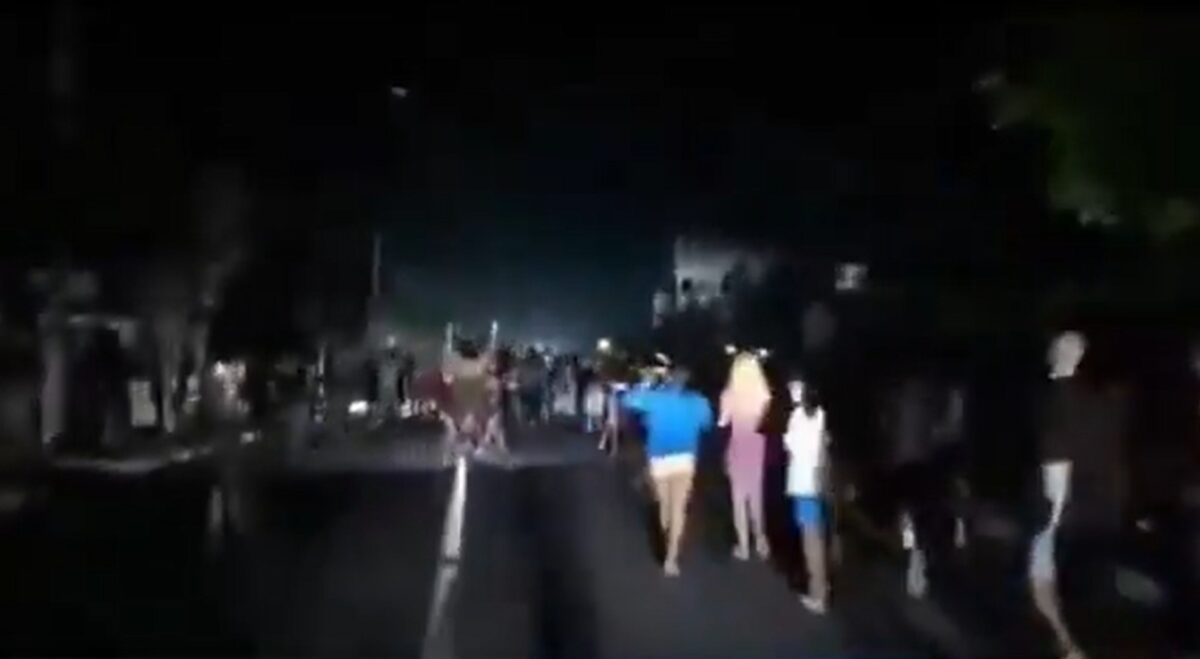

Cuba just went completely dark, and it’s not some minor inconvenience you shrug off with a flashlight and a generator. The entire national electrical grid collapsed, leaving millions without power and putting a spotlight on a system that has been barely holding together for years.
Officials confirmed it was a “complete disconnection” of the country’s power network. That means everything, hospitals, refrigeration, transportation, basic infrastructure, all hit at once. When a country loses electricity on that scale, it’s not just a technical failure, it’s a full-blown national crisis.
And let’s not pretend this came out of nowhere. Cuba’s power grid has been deteriorating for decades under a system that prioritizes control over competence. Aging plants, lack of investment, and dependence on foreign oil have turned the grid into a house of cards. All it takes is one major disruption, and the whole thing comes crashing down.
BREAKING: CNN’s Brianna Keilar: “Cuba’s electrical grid has suffered a complete and total collapse. This is according to the country’s power operator.”
“It’s the 1st nationwide blackout since the US effectively shut off the flow of oil to Cuba.” pic.twitter.com/hnoo243eG7
— RedWave Press (@RedWavePress) March 16, 2026
🚨CUBA IN COMPLETE BLACKOUT NO ELECTRICITY
Cuba is in a complete blackout after the electric grid shut down.
It’s now the second day with no electricity whatsoever.
This is the testing ground, isn’t it? pic.twitter.com/hX4TpASCD1
— Mr. Nobody (@MmisterNobody) March 17, 2026
That disruption came as the United States effectively cut off key oil flows that Cuba has relied on to keep the lights on. Suddenly, the regime couldn’t paper over its own failures anymore. When the fuel dried up, so did the illusion that everything was under control.
President Trump didn’t sugarcoat it. He called Cuba a “failed nation,” and based on what just happened, it’s hard to argue with that assessment. A functioning country doesn’t lose its entire power supply overnight. That’s the kind of breakdown you see when leadership has run out of options.
What makes this moment even more interesting is the timing. President Trump has been signaling that action on Cuba is coming soon. Whether that means negotiations or something more aggressive is still unclear, but the pressure is building from every direction. The regime is facing internal instability, economic collapse, and now a complete infrastructure failure.
At the same time, there are reports that the Department of Justice is preparing charges against Cuban leaders tied to drugs and violence. That’s not just political posturing, that’s a serious escalation that could further isolate the regime on the world stage.
Meanwhile, everyday Cubans are paying the price. No electricity means no reliable food storage, no consistent medical care, and no normal daily life. While the government scrambles to restore power, the reality on the ground is harsh and immediate.
For decades, people have talked about change in Cuba like it was always just around the corner. But moments like this make it feel different. When the lights go out across an entire country, it’s not just symbolic, it’s a sign that the system itself is failing in real time.
The question now isn’t whether Cuba is in trouble. That part is obvious. The question is what happens next, and how long the regime can keep control when it can’t even keep the lights on.
Leave a Comment