
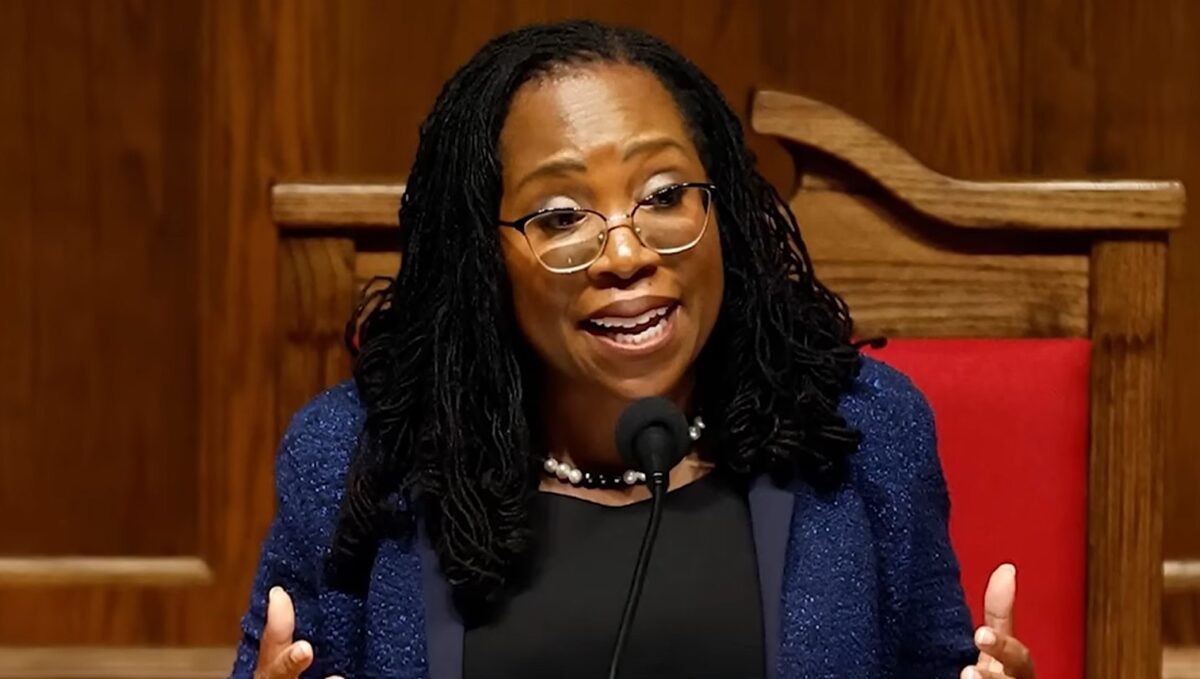

Things got tense at the Supreme Court, and not the polite, academic kind of tense. More like, “you’re asking us to rewrite a century of understanding” tense. That’s what unfolded when John Sauer went head-to-head with Ketanji Brown Jackson over the Trump administration’s push to rethink birthright citizenship.
At the center of the fight is the 14th Amendment, specifically the Citizenship Clause, which has long been interpreted to grant automatic citizenship to nearly anyone born on U.S. soil. The Trump administration is arguing that interpretation has gone too far, and that the original meaning was more limited, tied to allegiance and jurisdiction in a stricter sense.
Jackson wasn’t buying it, at least not without a fight. She laid out what she saw as the administration’s uphill battle, saying their argument depends on two big assumptions. First, that the framers of the 14th Amendment didn’t intend to adopt the traditional English common law understanding of birthright citizenship. Second, that they replaced it with something else entirely, a standard based more on domicile and allegiance in a narrower, almost contractual sense.
That’s not a small tweak. That’s a full-on reinterpretation.
Jackson pointed to early precedent, including The Schooner Exchange v. McFaddon, arguing that the Court had already defined “allegiance” in a way tied to territorial jurisdiction well before the 14th Amendment was ratified. In plain English, if you’re born under U.S. laws and protections, you’re part of the system. That understanding didn’t come out of nowhere, it was already baked into legal thinking at the time.
🚨 BREAKING: President Trump has just LEFT the Supreme Court after witnessing a masterclass where John Sauer DESTROYED DEI Ketanji Brown Jackson's pro-illegal arguments for 9 minutes
Sauer is clear: the 14th Amendment requires ALLEGIANCE TO AMERICA.pic.twitter.com/sI6oQSjSTv
— Eric Daugherty (@EricLDaugh) April 1, 2026
So her question to Sauer was pretty straightforward, even if she dressed it up in legal language. Why should the Court now assume the framers meant something totally different than what courts had already said?
Sauer’s position, aligned with President Trump’s broader immigration agenda, pushes back on the idea that physical presence alone should guarantee citizenship. The argument leans heavily on the concept of allegiance as something more deliberate, more tied to legal status and national loyalty than just geography.
Critics say that’s rewriting history. Supporters say it’s correcting a misinterpretation that’s been stretched beyond recognition.
What makes this case especially important is what’s at stake. This isn’t some technical legal dispute that only constitutional law professors care about. A ruling here could redefine who is automatically considered an American citizen going forward. That’s a foundational question, not a footnote.
The exchange between Jackson and Sauer highlighted exactly how deep the divide is. On one side, a reliance on long-standing precedent and historical interpretation. On the other, an argument that those interpretations got it wrong and need to be revisited.
However this lands, it’s not going to be a quiet decision.
Leave a Comment