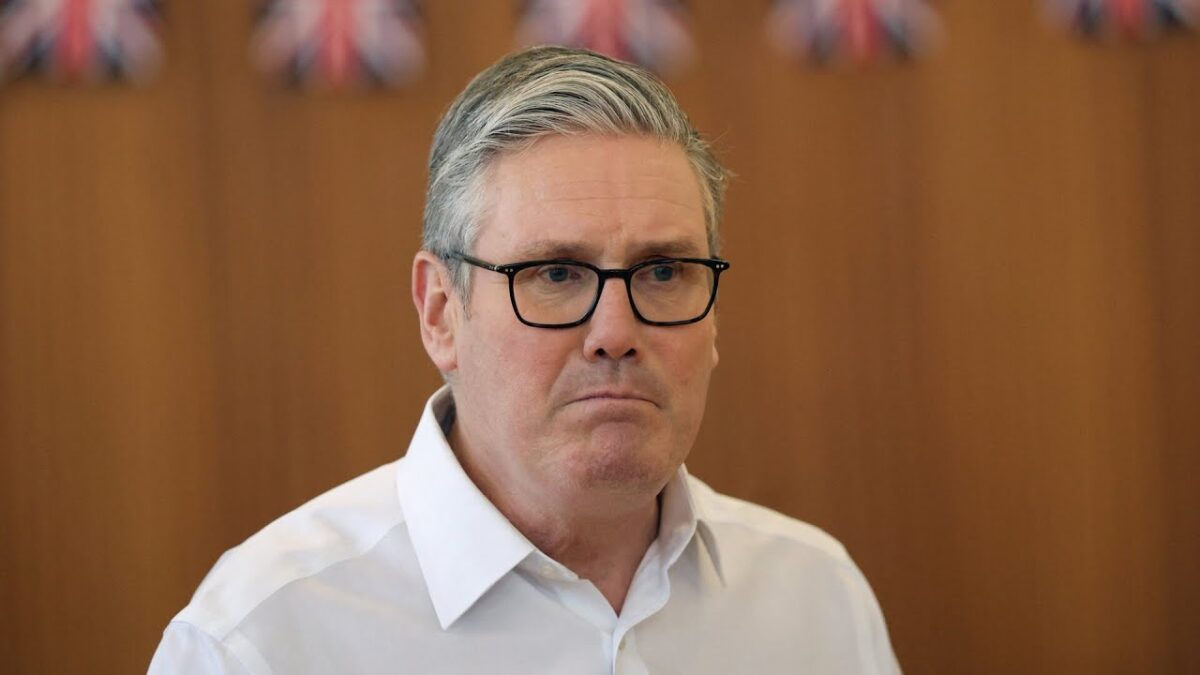

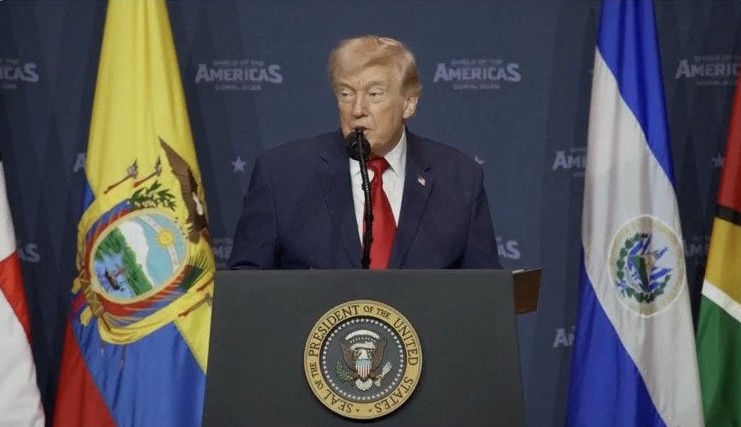
President Trump fired off another headline grabbing post on TruthSocial this week, and this one landed like a brick through a window. After reports surfaced that the United Kingdom was planning to deploy two aircraft carriers to assist in the conflict with Iran, President Trump responded with a blunt message that left very little room for interpretation.
Go back home.
In the post that quickly made the rounds online, President Trump wrote, “We don’t need people that join Wars after we’ve already won!” It was classic Trump, short, sharp, and dripping with the kind of confidence that drives Washington insiders crazy and his supporters absolutely love.
The comment came after news broke that the UK was preparing to move two carrier groups into the region, supposedly to assist in stabilizing the situation. According to President Trump’s message, that assistance is unnecessary. In his view, the United States had already secured victory, and late arrivals to the battlefield were not exactly needed.
Whether you agree with the bluntness or not, the statement reflects a larger shift in tone that has defined President Trump’s approach to international politics. The traditional diplomatic language of “coalitions” and “global partners” has often been replaced with a much simpler framework, America handles its own business.
The situation has also reignited a broader conversation about the United Kingdom’s role in global politics and its relationship with the United States. For decades Americans have been told that the UK is our closest ally, the famous “special relationship.” But critics increasingly argue that behind the scenes, financial and political power centers tied to London have not always acted in America’s interests.
Some analysts have pointed to historical examples to illustrate that claim. One of the most controversial involves the 1979 oil crisis, which many people at the time believed was simply a market shock. According to researchers like Barbara Boyd, the event was far more calculated than it appeared.
The theory suggests that the spike in oil prices was used as an economic weapon that ultimately destabilized Iran during the reign of the Shah. At the time, Iran was undergoing rapid industrial development, building steel mills, machine tool factories, rail networks, and nuclear power infrastructure. With American cooperation, the country was moving toward becoming a major industrial power.
Then the economic pressure hit, energy prices soared, and political instability followed. The revolution that replaced the Shah dramatically changed the region and reshaped global politics for decades.
Fast forward to today, and critics of global financial power believe similar tactics are being used again. Energy price spikes, market volatility, and media driven panic have been blamed by some analysts on financial networks tied to the City of London and Wall Street speculation.
The goal, according to that argument, is to disrupt President Trump’s America First economic agenda, which focuses on tariffs, energy dominance, and rebuilding American industry.
Whether those claims prove accurate or not, President Trump’s TruthSocial post sent a clear message. When it comes to American military victories and economic policy, he is not interested in late arriving partners or outside pressure.
In typical Trump fashion, the message was not subtle. And judging by the reaction online, plenty of Americans appreciated the directness.
Leave a Comment