
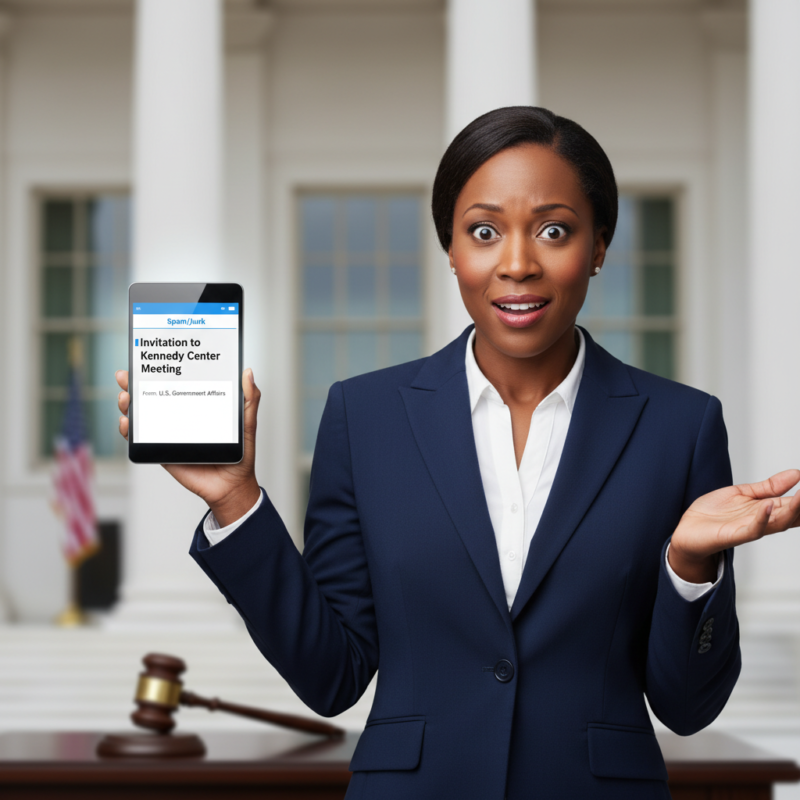

Washington has produced plenty of political theater over the years, but sometimes the script writes itself. The latest episode involves Democratic Representative Joyce Beatty of Ohio, who managed to file a lawsuit against President Trump and the Kennedy Center board of trustees, only to discover the entire dispute existed because of a spam folder.
Beatty initially claimed she had been deliberately excluded from an upcoming March 16 meeting of the Kennedy Center’s board, where plans to overhaul the institution are expected to be finalized. As an ex officio trustee, Beatty argued she had every right to attend and accused the Trump administration of freezing her out of the process.
So she did what many Democrats in Washington seem to do these days when anything involving President Trump appears inconvenient. She filed a lawsuit.
According to reports, Beatty sued President Trump and the Kennedy Center’s board in federal court, alleging she had been intentionally denied access to the meeting and asking the court to block the plans tied to the gathering.
There was just one problem with the case.
She had actually been invited.
Court records revealed that the Justice Department pointed out the obvious during the proceedings. The meeting invitation had been sent, and it was sitting quietly inside Beatty’s personal email spam folder the entire time. Her own attorneys eventually had to acknowledge the awkward discovery in court filings.
That realization came just before a hearing where Beatty was seeking a restraining order related to the meeting.
In other words, a federal lawsuit aimed at the President of the United States was triggered by a junk mail filter.
Democrat Congresswoman's Kennedy Center Lawsuit Implodes Over Spam Folder Blunder
Rep. Joyce Beatty (D-Ohio) filed a federal lawsuit against President Trump and the Kennedy Center board, claiming she was deliberately excluded from a key board meeting on revamping the… pic.twitter.com/mqTrH3jj7k
— Michelle Maxwell ™ (@MichelleMaxwell) March 13, 2026
Her lawyers attempted to soften the embarrassment while explaining the situation. “Plaintiff appreciates Defendants’ confirmation that she can attend the meeting at the White House,” Beatty’s legal team wrote after locating the email. They also noted that “upon further investigation,” the invitation had been discovered in the spam folder.
Attorney Norm Eisen defended the situation while speaking to reporters after the hearing. “I doubt there’s a single person here who hasn’t had an email vanished somewhere in a spam filter,” Eisen said. “That’s what happened here.”
Even so, Beatty’s legal team attempted to redirect some blame toward the Kennedy Center leadership, arguing that officials had ignored her inquiries for two days when she could not locate the invitation.
Beatty herself suggested part of the confusion stemmed from how meeting notices are normally distributed. She told reporters that invitations typically go to her official scheduler and chief of staff. According to her explanation, her chief of staff had stopped receiving emails months ago, while her scheduler did not receive the notice for this particular meeting.
Instead, the invitation was sent to Beatty’s personal email account, where it quietly landed in the junk folder.
The incident quickly sparked criticism online and raised broader questions about the rush among some lawmakers to challenge every Trump administration action through litigation. Filing a federal lawsuit is usually considered a serious step requiring careful preparation.
Checking the spam folder might be a reasonable step before that.


Leave a Comment