
House Republicans are exploring a new route for advancing major portions of President Trump’s election legislation through the Senate, turning to budget reconciliation in an effort to avoid the chamber’s normal 60-vote threshold for overcoming a filibuster.
The proposal centers on two major provisions of the SAVE America Act: requiring documentary proof of U.S. citizenship when registering to vote and requiring photo identification when casting ballots in federal elections. The House passed legislation containing those requirements earlier this year. The House Administration Committee describes the measure as requiring both photo ID at the ballot box and proof of citizenship during registration.
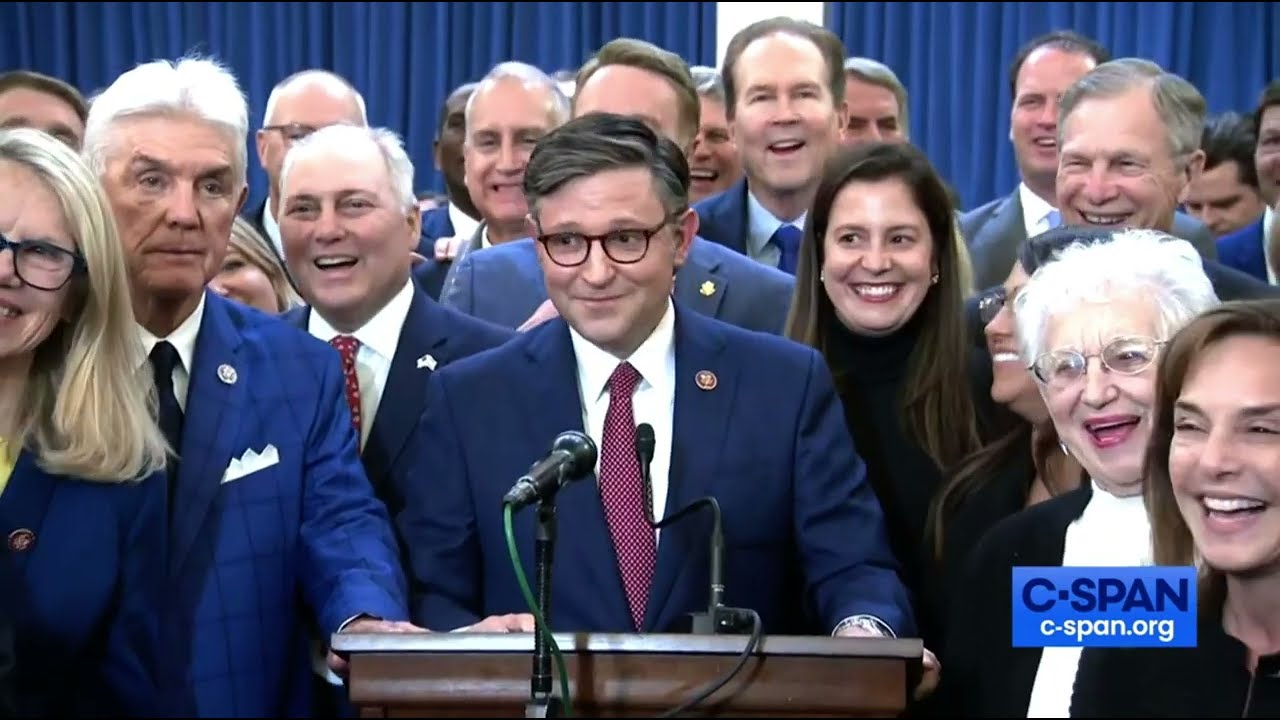
House Administration Committee Chairman Bryan Steil is now discussing whether election-related provisions can be incorporated into reconciliation legislation, according to reporting on the effort.
That procedural route could significantly change the Senate mathematics.
Reconciliation legislation is generally protected from a filibuster, meaning qualifying provisions can advance without securing the 60 votes normally required to invoke cloture on most legislation. Republicans would instead need sufficient support within their own Senate conference to pass the final package.
There is, however, a substantial procedural obstacle: the Byrd Rule.
Under Senate rules, reconciliation cannot simply become a vehicle for any policy a congressional majority wants to enact. Section 313 of the Congressional Budget Act prohibits “extraneous” provisions, including measures that do not change federal spending or revenue and provisions whose budgetary effects are merely incidental to their broader policy consequences.
That makes the structure of any election provisions crucial.
Republicans are examining whether federal election funding could provide the necessary budgetary connection. The proposal described in current reporting could link requirements involving voter identification, proof of citizenship and election audits to federal money distributed to states.
Even that approach would not guarantee the provisions survive Senate scrutiny.
Recent reconciliation battles demonstrate how consequential the Byrd Rule can be. In 2025 and 2026, the Senate parliamentarian advised that numerous provisions in Republican reconciliation proposals were subject to Byrd Rule objections, including measures that had identifiable financial components but were deemed incompatible with reconciliation requirements.
The parliamentarian’s review concerns whether provisions comply with reconciliation rules, not whether the underlying policies are desirable.
The election legislation itself remains politically contested.
Republican supporters argue that citizenship documentation and voter identification requirements would provide uniform safeguards for federal elections. Democrats and voting-rights advocates have argued that documentary requirements could create additional barriers for eligible citizens who lack readily available qualifying records.
Federal law already prohibits noncitizens from voting in federal elections. The dispute therefore centers largely on what documentation voters should have to provide, how states should verify eligibility, and whether Congress should establish nationwide standards.
For Republicans, reconciliation potentially offers a procedural route around Democratic opposition in the Senate, but only if the election provisions can survive the chamber’s budget rules. That question could determine whether the SAVE America Act’s central requirements advance through Congress before the 2026 midterm elections.

Leave a Comment