
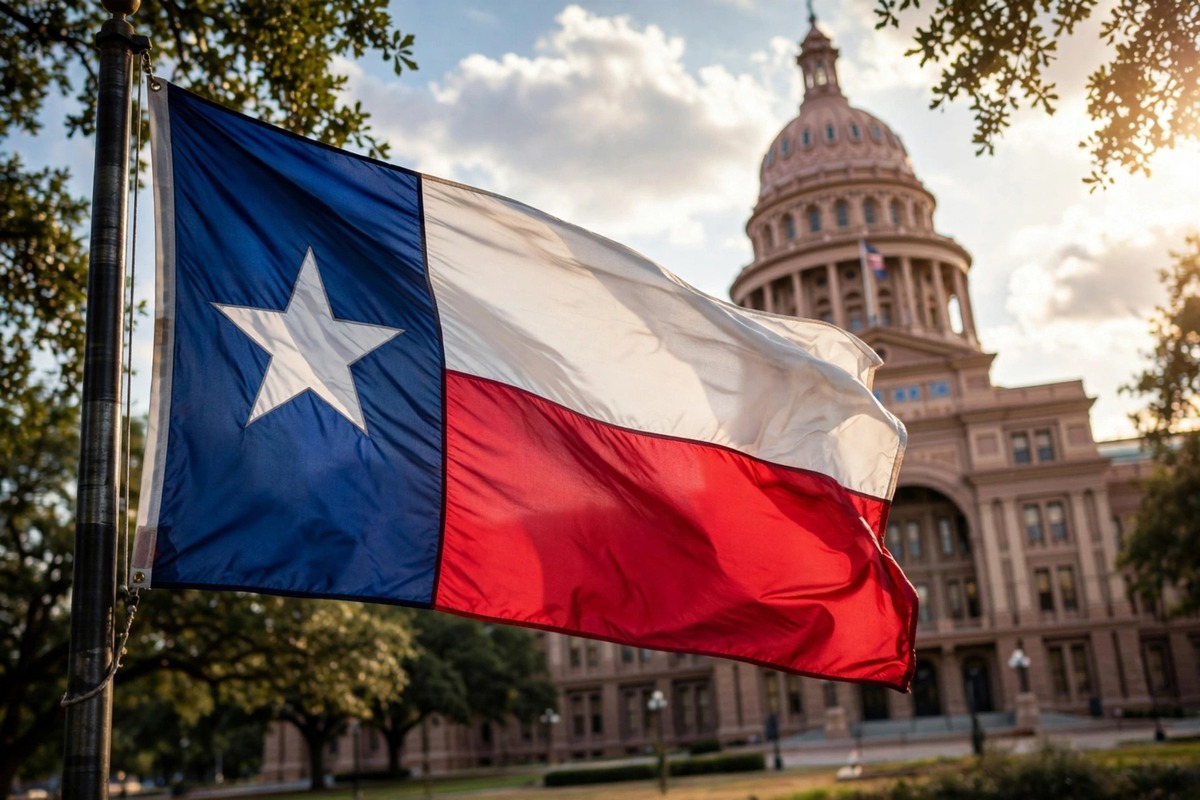

Texas politics just turned into a direct legal showdown over religion, public schools, and the limits of state power. According to WLT Report, the midterm elections brought what the report described as a “red wave” to states nationwide, with Texas seeing every statewide race go to Democrats. That includes Nathan Johnson, who is set to become the state’s next attorney general.
Johnson, the first Democrat elected Texas attorney general in nearly three decades, is already taking aim at Senate Bill 10, the law requiring the Ten Commandments to be displayed in classrooms. His position puts him squarely at odds with outgoing Republican Attorney General Ken Paxton, who championed the legislation and defended it in court.
In an interview with The Dallas Morning News, Johnson called the law “unconstitutional.” He explained his position this way: “My jurisprudential opinion is that the law is unconstitutional,” Johnson said. “The court will have the ultimate say as to what’s constitutional and what is not, but I’m the one who says what the state’s position is, and it will not be the position the state has previously taken.”
Under Texas law, Senate Bill 10 requires a “conspicuous” copy of the Ten Commandments in every classroom at every public school and open-enrollment charter school across the state. That is not exactly a minor policy memo tucked away in an agency filing. It is a statewide requirement, and Johnson is signaling that Texas will no longer defend it in the same manner under his leadership.
The legal conflict is already complicated. A judge ruled that a similar Arkansas law was unconstitutional, while the U.S. Court of Appeals for the 5th Circuit ruled that Texas’s law could stand. Paxton described that federal court decision as a “major victory for Texas and our moral values.” His office argued that students should learn from the Ten Commandments every day, while Texas Republicans have also pursued optional biblical lessons and required reading involving biblical stories for some grades.
Johnson’s announcement quickly triggered backlash on social media. One response summarized the opposing view this way: “Freedom of religion. Doesn’t mean freedom from religion.” Others used much harsher language, because apparently a classroom display can become a constitutional fire drill before the new attorney general even takes office.
A lot of politicians are corrupt but democrats are evil.
— Old Man Mark ✝️ (@OMMark65) November 28, 2026
Freedom of religion. Doesn’t mean freedom from religion.
— Joseph Hall II (@joehall2nd) November 28, 2026
Attention #TEXAS #DEMOCRAT VOTERS
You are just starting to get the “YEARS OF GODLESS GOVERNMENT” you MORONS WILL REGRET YOU VOTED FOR🤬 … Remember “UNDER GOD” in the #Pledge #of #Allegiance
?Texas: Incoming Attorney General Nathan Johnson Refuses to Defend Ten Commandments…
— Terry (@RowseTerry) November 28, 2026
The Ten Commandments dispute is only one part of Johnson’s promised confrontation with Republican-backed policies. He pledged to serve as a legal stopgap against what he called “the MAGA machine’s assault” on individual rights and what he described as overreach from the Trump administration. He also made clear that he would not be enforcing many of these laws.
That position extends to construction of the Trump administration’s border wall in Big Bend. Johnson said he would work to block the project, calling it wasteful, corrupt and “ineffectual,” while adding that it posed “tremendous constitutional problems regarding separation of powers.” So the incoming attorney general is not limiting his opposition to a classroom poster. He is preparing for a broader fight over education, immigration, executive authority, and the state’s role in defending laws passed by Republican lawmakers.
Supporters of the Texas law see the Ten Commandments as a foundation for moral instruction. Johnson sees the requirement as unconstitutional and says the state’s legal position must change. His own statement acknowledges that courts will ultimately decide the constitutional question, but his office will now be the one choosing which arguments Texas makes and which policies it defends. The result is a major change in direction for the state, and the courtroom battle is only getting started.

Sound off
Join the conversation
Be the first to comment.
Load more comments