
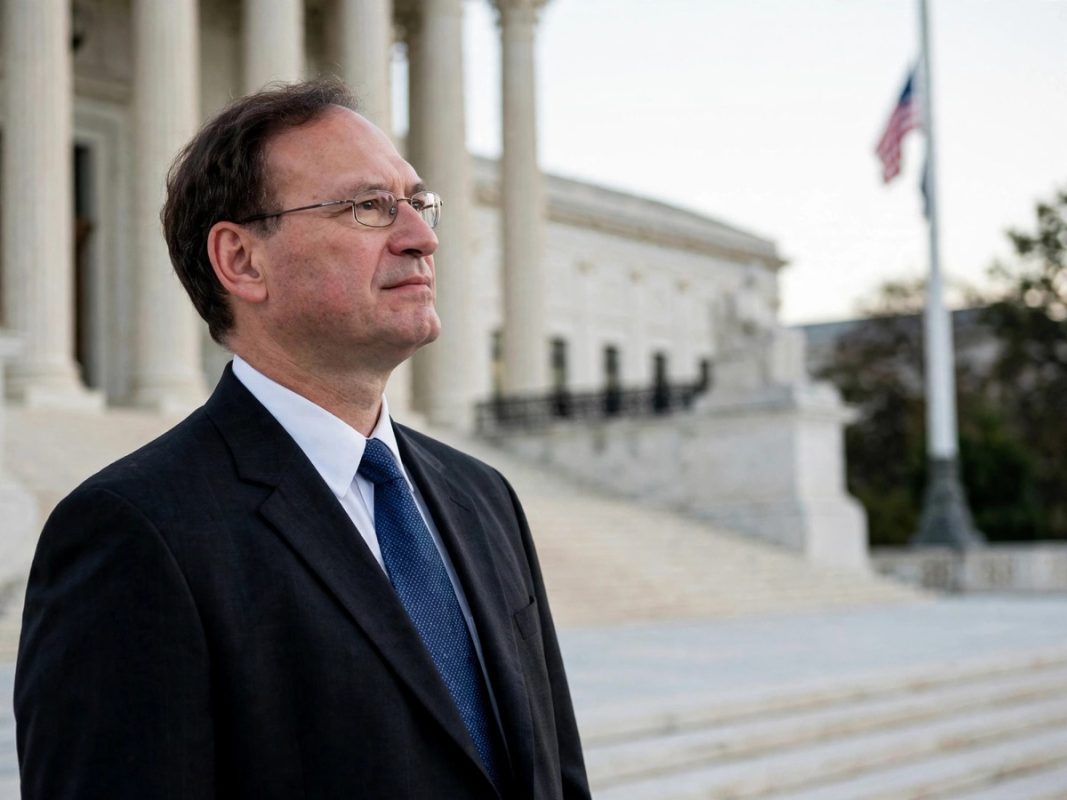

Emergency rulings are becoming routine
Justice Samuel Alito says the Supreme Court’s emergency docket has become a serious problem, not merely an inside-baseball dispute for legal specialists. In a rare CBS News interview connected to the release of his first book, So Ordered, Alito said the number of emergency appeals has “gone through the roof.” The cases arrive so quickly that the justices are often asked to decide disputes with national consequences on compressed timelines, without the full briefing, oral argument, and signed opinions normally associated with the Court. Last term, the emergency docket nearly matched the Court’s regular merits docket. That is a major shift in how the federal government makes and enforces policy.
Supreme Court Justice Samuel Alito said the escalating volume of emergency appeals before the court during President Trump’s second administration isn’t a good thing. https://t.co/vvCfvVz9Cv
— The Boston Globe (@BostonGlobe) October 6, 2026
Washington keeps feeding the cycle
Alito pointed to a political system that increasingly tries to govern around Congress. Presidents frustrated by legislative gridlock have sought to accomplish through executive orders and regulations what they could not get lawmakers to approve. Opponents then file lawsuits in jurisdictions they believe will be receptive. When a district judge blocks a policy, the administration seeks urgent relief from an appeals court and eventually the Supreme Court. That cycle turns major constitutional disputes into emergencies before the normal legal process has had time to do its job. It is a relay race between the executive branch, trial courts, appeals courts, and the justices, with the public stuck watching the baton change hands.
Supreme Court Justice Samuel Alito says the escalating volume of emergency appeals before the court isn't a good thing, but he adds there's little the court can do to change the trajectory.https://t.co/kqjpp0c89s
— WVUA 23 (@wvua23) October 6, 2026
Venue shopping makes the pressure worse
Alito also criticized the growing use of favorable jurisdictions and broad lower-court orders. Republican challengers frequently sued in Texas during the Biden administration, while Democratic challengers have gravitated toward Massachusetts, Washington, D.C., and San Francisco during President Trump’s second term. Alito said some district courts have gone too far by disrupting national policy at the beginning of a case. Those rulings can send disputes to the Supreme Court before the ordinary appellate process is complete or the factual and legal record is mature. The justices may then have to weigh a nationwide policy while the case is still warming up.
Alito says Supreme Court can’t stem emergency appeals and voices concern over Trump’s rhetoric via @Lwhitehurst https://t.co/h7P8hhvLkD
— Michael Tackett (@tackettdc) October 6, 2026
The tally shows how fast the docket changed
Axios reported that the Trump administration filed its 41st emergency application in late September, matching the total from President Trump’s entire first term. The Court has tried to slow some disputes by ordering arguments or granting full review immediately, but Alito said those steps cannot solve every genuine emergency. A ruling delivered months later may come after the practical harm has already occurred. He said the constitutional system is not functioning as the framers intended, with executive action, strategic litigation, and broad lower-court orders colliding before the Court can use its deliberate process. Congress, meanwhile, often remains on the sidelines while judges answer questions elected lawmakers avoided.
WE’D LOVE TO HEAR YOUR THOUGHTS! PLEASE COMMENT BELOW.

Leave a Comment