
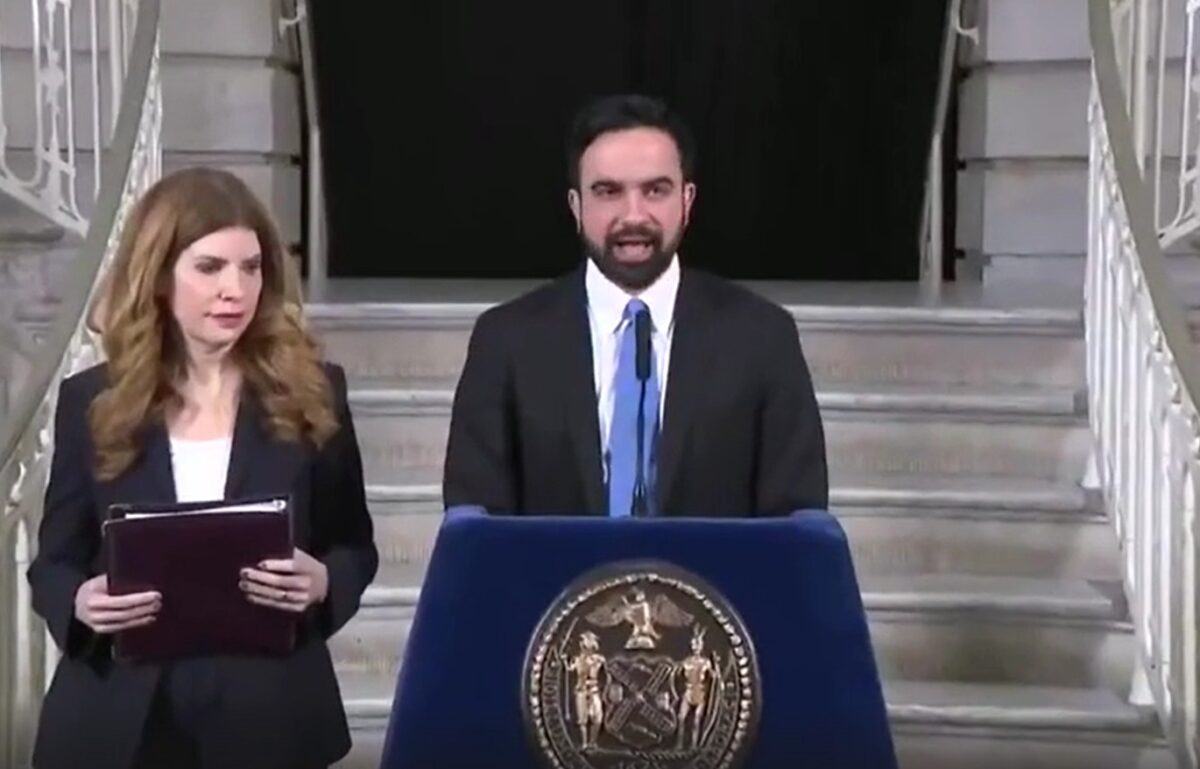

Just four months into his term, New York City Mayor Zohran Mamdani is already delivering the kind of speech politicians usually save for year three, the emergency budget warning. In a public address, Mamdani declared that the city faces a “budget crisis of historic magnitude,” citing years of fiscal imbalance and rising costs that now threaten to blow a massive hole in city finances.
Welcome to governing.
According to city officials, the shortfall sits somewhere between $5.4 billion and $6 billion. That is not a rounding error. That is a flashing red alarm on the dashboard of America’s largest city.
Mamdani said New York inherited “a deficit larger than any since the Great Recession.” He added that savings alone will not solve it, calling for new revenue and a “structural reset” with the state. Translation: the city needs Albany to help and taxpayers to brace themselves.
The causes are not mysterious. Years of spending commitments, expanding social programs, migrant-related costs, and rosy financial assumptions have collided with reality. New York has long operated under the belief that growth would cover everything eventually. Eventually has now arrived carrying an invoice.
Mamdani also suggested the prior administration left behind projections that understated the severity of the problem. That may be true. It is also one of the oldest traditions in politics, inheriting a mess and immediately explaining whose fault it is.
To close the gap, Mamdani is seeking more state aid and considering new revenue measures. He stood beside City Council Speaker Menon to announce a delay in the executive budget deadline until May 12, giving negotiators more time with Kathy Hochul and state lawmakers.
That request is already running into resistance. Hochul and others have reportedly opposed major tax hikes, instead urging the city to rein in spending and find internal savings. In other words, Albany appears interested in offering advice rather than cash.
That leaves Mamdani trying to square an impossible circle. He has floated potential tax increases on high earners and possible property tax changes, while simultaneously promising not to burden working-class New Yorkers. Every mayor loves that sentence until the math starts talking back.
The administration says cuts are being identified carefully and without harming core services. Critics are skeptical, and for good reason. Closing a multi-billion-dollar hole without service reductions, major taxes, or outside help is the municipal version of claiming you will lose weight by buying larger mirrors.
This crisis is now the defining early test of Mamdani’s leadership. Campaign rhetoric is easy when budgets are theoretical. Running New York means dealing with payrolls, pensions, transit pressures, housing demands, and arithmetic that does not care about ideology.
The coming weeks will reveal whether City Hall can negotiate a real solution or merely postpone the reckoning. If Albany refuses to blink and spending cuts prove politically toxic, Mamdani may learn quickly that governing a progressive dreamland still requires balancing the books.
Turns out slogans do not count as revenue.

Ain’t Communism great! Suck it up COMMIE!
Coming soon to a city near you. In Chicago the impact on the finances could be worse.
New York’s regional population seems to hang around 25 million people. Chicago’s region is around half as big at around 10 million. Both cities’ politicians are scamming the suckers who have not learned that you get the feeding-off-your- wallet frenzy that you vote for.
It is a disaster! Unfortunately, what is also “coming” to other cites are the liberals who flee the disasters – but bring the same failed ideas with them. They do not learn from it. Once out of the unpleasant consequences, they push the same ideas in the new location. They truly believe, “Well, it’s gonna work this time!”
Saw CA Dems flood into CO starting in 1993, because the CO economy was booming. They escaped the messes in CA, but brought in the same woke/failed crap. As they turned CO blue, over the years, I saw interviews with many of them. They had a common mind set. When confronted about the things that had destroyed CA, they claimed,”Well, we’re doing to do it better this time!”
I moved to MO two years ago.