
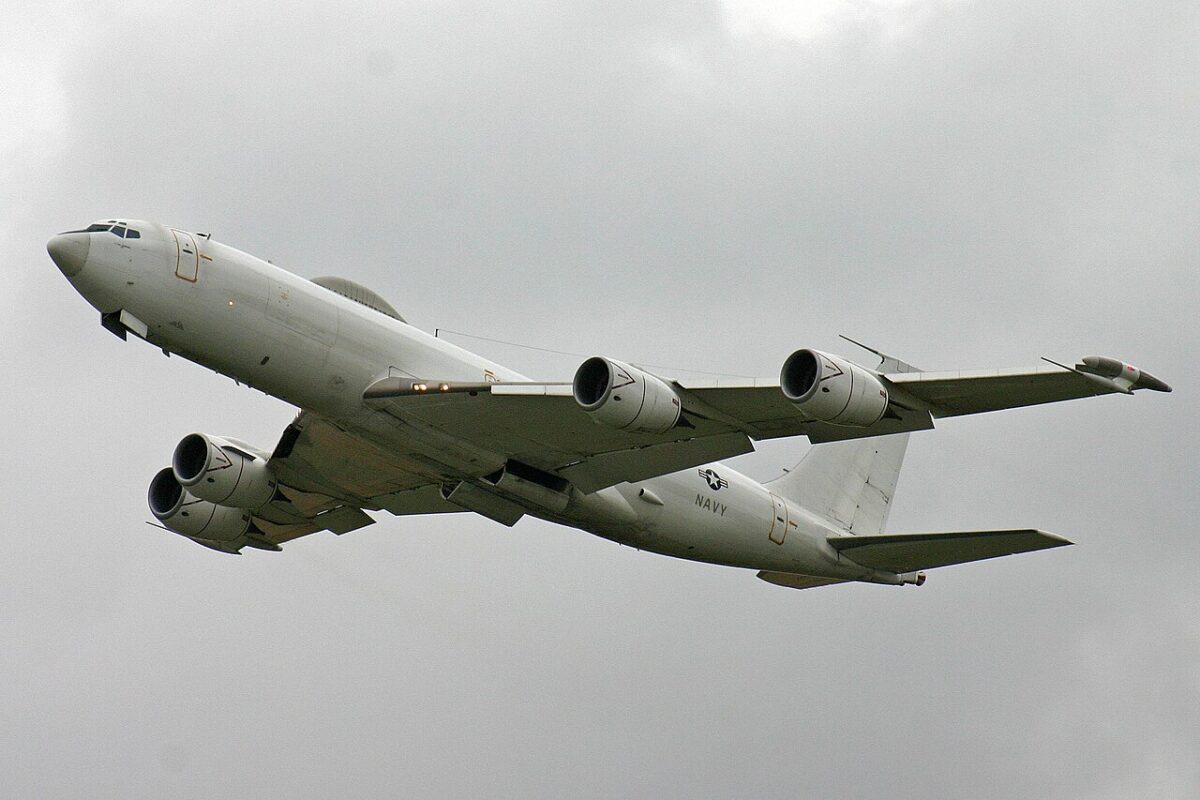

As the war with Iran intensifies, one of the most ominous pieces of America’s military arsenal has quietly taken to the skies. The U.S. Navy’s E-6B Mercury aircraft, commonly known as “Doomsday planes,” have been spotted conducting multiple flights since the conflict began on February 28.
Flight tracking data shows several of the specialized aircraft launching from different locations across the United States. These massive planes are not ordinary military transports. They are flying command centers designed for one purpose, ensuring the United States can still coordinate a nuclear response even if the country’s ground based command systems are destroyed.
The E-6B Mercury is built from modified Boeing 707 airframes, but what makes it unique is the technology packed inside. The aircraft functions as a strategic communications hub capable of linking the president, top military officials, and nuclear forces across the globe. Even if enemy strikes disabled traditional communication networks, the E-6B allows orders to reach nuclear submarines deep underwater, missile silos on land, and command centers operating underground.
In other words, if the unthinkable happens, these planes help ensure the chain of command does not break.
Tracking data shows two of the aircraft flying on March 2. One traveled from the Gulf Coast before landing at Naval Air Station Patuxent River in Maryland. Another launched from Offutt Air Force Base in Nebraska, home of U.S. Strategic Command, before eventually returning to the base.
Since those initial flights, military observers have reported additional E-6B launches heading toward the Atlantic and potentially toward the Persian Gulf region. The Pentagon has declined to comment on the flights, citing operational security, which is standard practice when dealing with sensitive military movements.
During times of major crisis, these aircraft are often positioned strategically so they can remain airborne or deploy near potential conflict zones. Their role is not to carry weapons but to maintain communications with nuclear forces under any circumstances.
The increased activity comes as tensions across the Middle East continue to rise sharply. Iranian missile strikes have targeted American bases, embassies, and allied facilities during the first week of fighting. U.S. and Israeli forces have responded with strikes on Iranian military infrastructure.
At the same time, global powers are beginning to take sides. China and Russia have both warned that the war could spiral into a wider regional conflict. Reports have also surfaced suggesting Russia may be sharing intelligence with Iran regarding American troop movements in the region.
Despite entering service more than four decades ago, the E-6B Mercury remains a central piece of America’s nuclear command and control system. The aircraft is specifically designed to ensure that the president and senior military leadership can communicate with nuclear forces even if the country is under attack.
Military officials often emphasize that these flights do not necessarily mean a nuclear confrontation is imminent. The planes are routinely used in training and readiness exercises to ensure the system works when needed.
Still, their sudden appearance in the skies during a growing international crisis is a powerful reminder of the stakes involved. When the Doomsday planes start flying more frequently, it usually means the world has entered a very serious moment.


Leave a Comment