

After the death of Alex Pretti during an immigration operation in Minneapolis, protests and tensions erupted on the streets. Hundreds of demonstrators assembled and demonstrations grew, with many calling for accountability and an end to federal immigration enforcement operations in the city. The unrest followed another recent fatality involving federal agents in the same campaign.
In response to the protests, Minnesota Governor Tim Walz mobilized the Minnesota National Guard to support law enforcement and help manage the volatile situation. Officials said the Guard was deployed to assist in keeping the peace after large crowds gathered and confrontations between protesters and federal agents intensified.
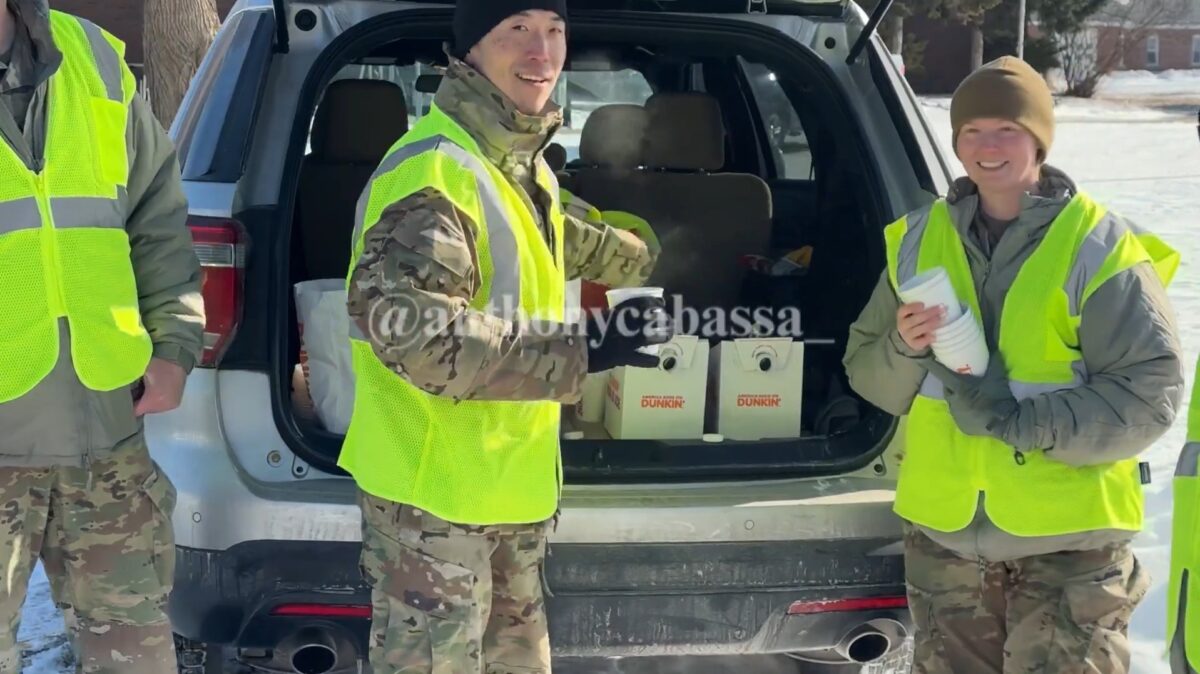
In the midst of that deployment, videos and photos circulated online showing Guard members handing out coffee, hot chocolate, and donuts to anti-ICE demonstrators in St. Paul while wearing reflective vests. Guardsmen later told local media that the gesture was intended as a “demonstration of safety and security” amid the emotionally charged protests.
https://twitter.com/anthonycabassa/status/2015515107363549485
Tim Walz's National Guard is handing out free coffee and donuts to anti-ICE protesters
— Breaking911 (@Breaking911) January 25, 2026
The reflective vests were not just for show: officials had noted that Guard personnel would wear them to distinguish themselves from other agencies, including federal law enforcement, in order to reduce confusion and avoid misidentification in a chaotic environment.
The optics of National Guard troops offering refreshments to protesters have sparked online debate. Supporters have described the approach as a de-escalation tactic aimed at reducing confrontations and stress, especially given the frigid temperatures and highly charged emotions on the ground. Critics, however, argue that handing out coffee and donuts sends the wrong message and downplays the serious public safety concerns surrounding the protests and the federal immigration enforcement mission.
It’s also worth noting that the National Guard remains under state control through Governor Walz, not federal command, which means decisions about their deployment and conduct are ultimately made at the state level.
Whether the Guard’s actions should be viewed primarily as crowd management or as undermining federal enforcement efforts depends largely on one’s perspective on the broader conflict over immigration law and protests in Minneapolis. What’s clear from the reporting is that the situation has grown into a complex and highly visible standoff between federal authorities, state leadership, and demonstrators.
Tampon Tims Band of PUSSIES like HIMSELF A BRAIN DEAD MORON