

The notice can look harmless: a brief letter in the mail or a quiet alert in a banking app saying your interest rate is going up. You did not miss a payment, max out the card, or suddenly turn responsible borrowing into a crime. You paid on time, often above the minimum, and the bank raised the rate anyway. Apparently, loyalty is now another item to be billed.
A cardholder described the frustration in an online complaint: “I followed the rules, made my payments on time, paid above my minimums and yet my reward is a penalty.” Her new rate was 29.24%, and the source says she is far from the only person facing a higher charge.
This is what the article calls a loyalty tax. A customer sticks with one card, pays reliably, and expects that good behavior to count for something. Instead, the interest line on the monthly statement gets larger. Call the bank, wait through the hold music, and a polite representative may explain that the new rate is “based on current market rates for similar accounts.” That explanation may be official, but it does not make the balance disappear.
The numbers can become painful fast. On a $15,000 balance at a 23% APR, interest alone could reach more than $3,000 per year, or over $250 each month. That is money not going toward the balance. It can mean less room for a car repair, a family expense, or the birthday check that was supposed to go to the grandkids. The payoff date keeps moving while the bank continues collecting.
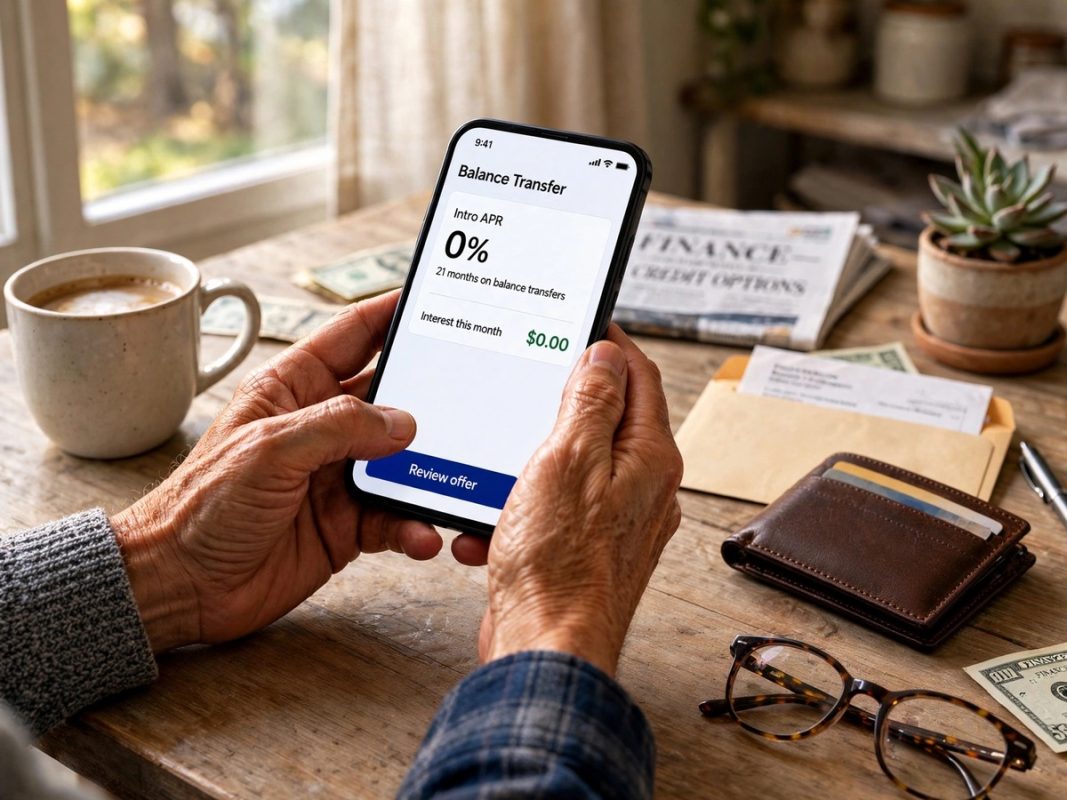
A balance transfer card is the move many long-time cardholders overlook. The card described in the source offers a 0% introductory APR for 21 months from account opening on purchases and qualifying balance transfers. It has no annual fee, and moving the balance does not change the old card’s rate. Instead, the balance transfers to the new card during the introductory period. FinanceBuzz named this card the 2026 Best 0% Intro APR and Balance Transfer Card.
People discussing 0% balance transfers online often describe the difference that temporary relief can make. One retiree wrote: “When I retired, I was carrying some hefty credit card balances… I got [a 0% card from the bank] and transfered a $13,000 balance from another card and kept it there at 0% APR for 20 of the 21 allowable months… In the 20th month, I paid [the card] off in full. [The bank]’s next statement said that I saved $1,700 in interest by using the balance transfer.” Another forum member said they were “happy to not be paying 24% interest any more. 6 months later, and the card will be paid off next Friday…” These comments concern 0% transfers generally, not reviews of this particular card.
The fee deserves attention. The annual fee is $0, while the balance transfer fee is 5%, with a minimum of $5. On a $15,000 transfer, that means a one-time fee of $750. Compared with more than $3,000 in annual interest at 23%, the fee is smaller in the source’s example. After the introductory period, the variable APR may be 17.74%, 24.24%, or 28.49%, depending on credit. Paying the $15,750 balance and fee across 21 months would require about $750 per month. The introductory window can help, but the post-introductory rate is where careless planning gets expensive again.


Leave a Comment