
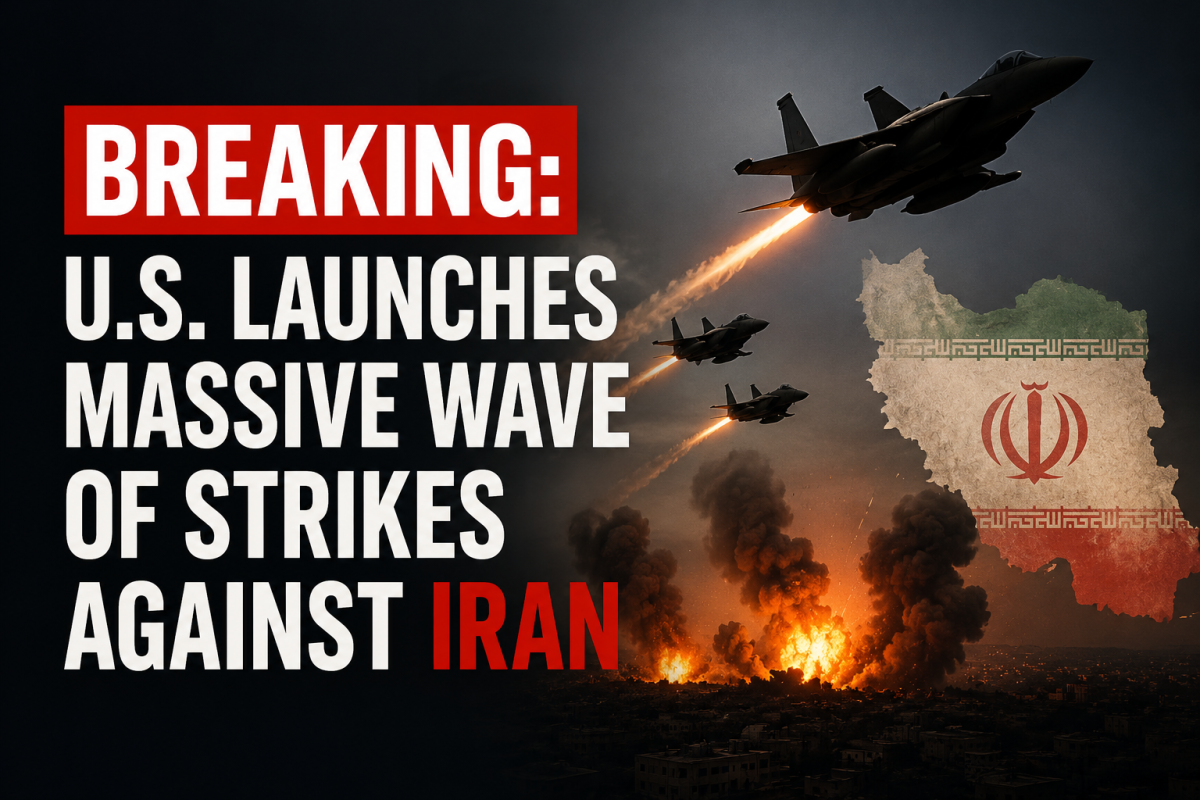

The conflict between the United States and Iran took another dramatic turn on Wednesday as the U.S. Military launched a fresh round of strikes against targets tied to the Iranian regime, signaling that President Trump’s administration has no intention of backing down following the downing of an American attack helicopter earlier this week.
According to U.S. Central Command, the latest operations began at approximately 5:15 p.m. Eastern Time and were carried out under direct orders from President Trump. Military officials described the strikes as self-defense actions in response to what they characterized as Iran’s continued aggression against American forces and interests in the region.
While full details remain limited, reports indicate that several targets in southern Iran were hit, particularly in areas near the strategically critical Strait of Hormuz. Locations reportedly affected include Bandar Abbas, along with the coastal villages of Minab and Sirik. Defense sources cited by reporters stated that the targets included air defense systems, radar installations, and drone command-and-control facilities.
The latest strikes came less than 24 hours after President Trump warned that additional military action was on the way. Speaking to reporters earlier Wednesday, the president left little room for interpretation.
“We hit them hard yesterday and we’re going to hit them hard again today in case you miss it, in case you don’t turn on your television set,” President Trump said.
He followed that up with an even more direct message.
“We’re going to be attacking them, attacking them very hard.”
If subtle diplomacy was on the menu, apparently nobody informed the White House.
War Secretary Pete Hegseth delivered a similarly forceful message while speaking at MacDill Air Force Base. Hegseth made it clear that U.S. Central Command was preparing for a busy evening and emphasized that military pressure would continue as long as Iran remained hostile.
“If we need to negotiate with bombs, we will negotiate with bombs,” Hegseth stated. “And we’re very good at it. Nobody better in the world.”
The current escalation began after an American Apache helicopter was shot down during a patrol mission off the coast of Oman on June 8. Although the crew was successfully rescued, U.S. officials blamed Iranian forces for the attack and quickly moved to respond.
On June 9, American forces launched three separate waves of strikes against Iranian radar sites and missile positions. Iran answered with attacks targeting U.S. military facilities in Bahrain, Kuwait, and Jordan, pushing tensions to their highest level since a ceasefire arrangement was reached in April.
Now, with another barrage of American strikes underway, many analysts expect Iran to retaliate once again. Whether that response comes in the form of missile attacks, drone strikes, or actions by proxy groups remains unclear.
What is clear is that the administration is sending a message that attacks on American service members will not go unanswered. For years, Iran has tested boundaries throughout the region while relying on the assumption that Washington would eventually seek de-escalation. The events of the past two days suggest that calculation may no longer apply.
As military operations continue and both sides exchange threats, the Middle East once again finds itself standing on the edge of a much larger confrontation.


What seems to be missing from the article is that Iran started this by launching missals at American military basses through the Mideast.