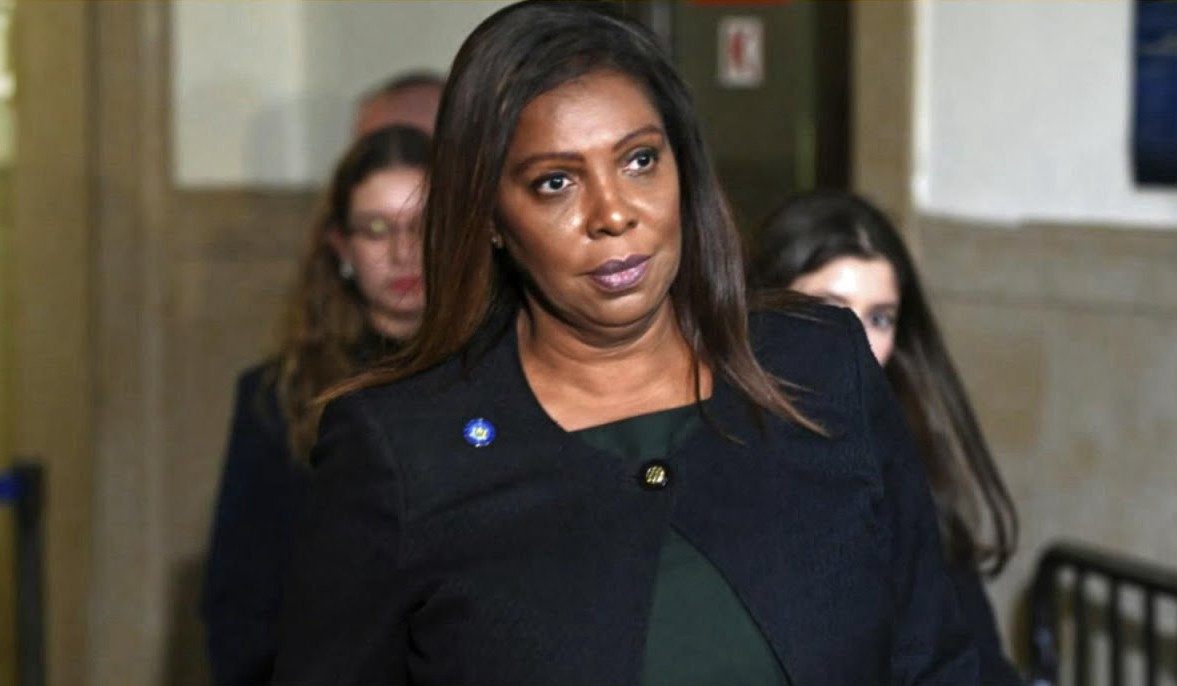

A recent television interview featuring New York Attorney General Letitia James has triggered a wave of questions among supporters of President Trump following her public praise of Jay Clayton, the president’s nominee to serve as Director of National Intelligence.
During an appearance on MSNBC, James criticized Acting DNI Bill Pulte while expressing support for Clayton’s nomination. She described Clayton as a respected professional who understands the law and suggested the Senate should give serious consideration to confirming him.
For many Trump supporters, that endorsement immediately stood out.
After all, Letitia James has spent years positioning herself as one of President Trump’s most determined political opponents. She campaigned on investigating Trump, pursued major legal actions against him, and became a central figure in some of the most high-profile legal battles involving the president and his businesses.
Given that history, many within the MAGA movement are asking a straightforward question: Why would one of President Trump’s most outspoken adversaries be so enthusiastic about one of his nominees?
The timing is particularly significant because the Director of National Intelligence is not just another cabinet-level position. The office oversees the broader intelligence community and plays a major role in national security assessments, classification decisions, intelligence coordination, and government transparency efforts.
The debate surrounding Clayton’s nomination comes after the tenure of former DNI Tulsi Gabbard, whose time in office earned praise from many Trump supporters for aggressively pursuing reforms within the intelligence bureaucracy. Gabbard became known for pushing declassification efforts, reducing the size of intelligence agencies, challenging entrenched institutional interests, and promoting greater public transparency on issues ranging from government surveillance to historical intelligence activities.
As a result, many conservatives view the next DNI selection through a very specific lens: Will the nominee continue that reform agenda or move the intelligence community back toward its traditional operating model?
That question has fueled scrutiny of Clayton’s background.
Unlike candidates who built careers as political outsiders, Clayton comes from the upper ranks of America’s legal and financial establishment. He spent years as a partner at the influential law firm Sullivan & Cromwell, representing major corporations and financial institutions. He later served as chairman of the Securities and Exchange Commission during President Trump’s first term before returning to private practice and eventually serving as U.S. Attorney for the Southern District of New York.
Supporters of the nomination argue that Clayton’s experience managing large organizations and navigating complex regulatory environments makes him well-qualified for the role. Critics, however, view his résumé as representing precisely the type of institutional background that many voters sought to challenge when they supported President Trump.
The controversy surrounding Letitia James adds another layer to the debate. Some Trump supporters believe her endorsement raises legitimate questions about how she views Clayton’s potential leadership and whether she sees him as someone likely to preserve existing bureaucratic structures rather than aggressively reform them.
Ultimately, Clayton’s confirmation process may hinge on how effectively he addresses those concerns. Senators and voters alike will likely want to hear his vision for the intelligence community, his views on transparency, and whether he intends to continue the reform efforts that have become a major priority for President Trump’s supporters.
For many conservatives, James’s endorsement is not necessarily viewed as an asset. Instead, it has become the catalyst for a broader conversation about the future direction of America’s intelligence agencies and whether meaningful reform remains on the horizon.


Leave a Comment