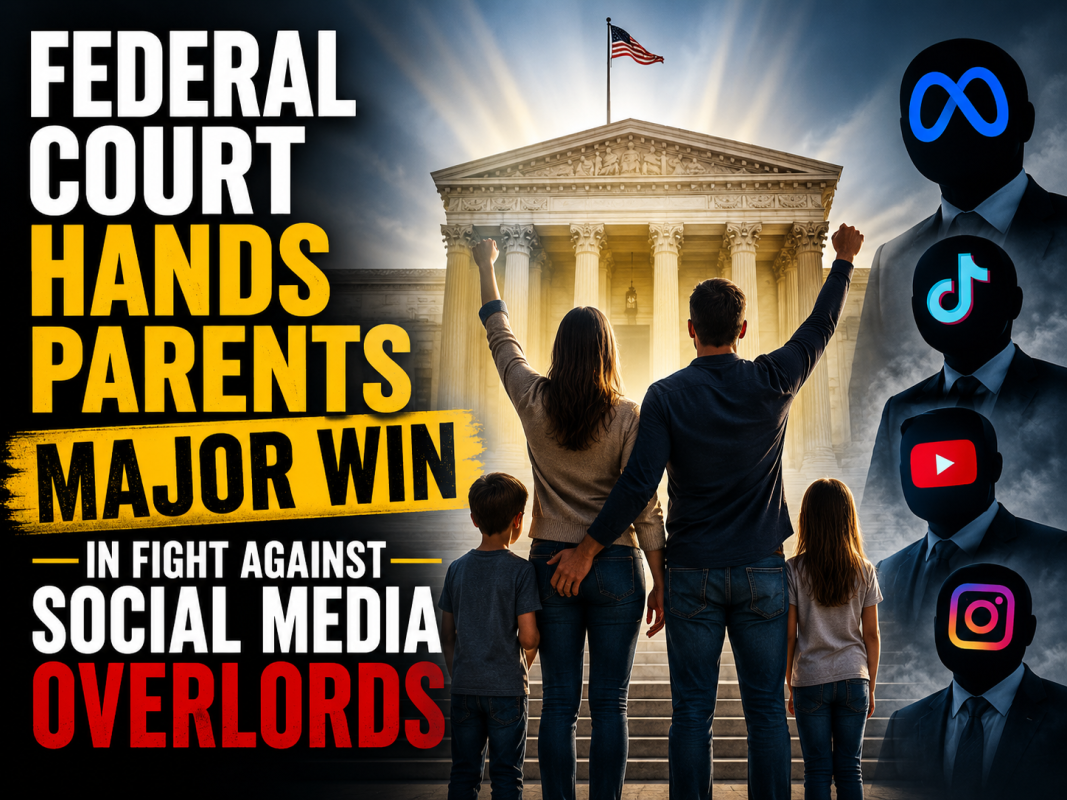

A federal appeals court has handed Ohio parents a significant win in the ongoing battle over children’s access to social media, and some of the largest technology companies in the country are not happy about it.
In a 2-1 decision, the U.S. Court of Appeals for the Sixth Circuit revived Ohio’s Social Media Parental Notification Act, reversing a lower court ruling that had blocked the law from taking effect. The lawsuit was brought by NetChoice, a trade organization backed by major tech companies including Meta, Google and YouTube, TikTok, Snapchat, and others.
The legal dispute centered on whether Ohio could require parental consent before children under the age of 16 create or use accounts on covered social media platforms. NetChoice argued that the law violated the First Amendment, was overly broad, and was too vague to be enforced fairly.
The appeals court disagreed.
According to the court’s opinion, the majority concluded that NetChoice failed to prove the law is facially unconstitutional. That finding represents a serious setback for the tech industry group, which has spent years challenging state-level child safety measures across the country.
Perhaps the most important part of the ruling is procedural. The appeals court instructed the lower court to enter judgment in favor of Ohio Attorney General Dave Yost, effectively clearing the path for the law to move toward enforcement after being frozen during years of litigation.
Ohio officials have argued that social media presents real risks for young people. The state pointed to concerns including mental health struggles, eating disorders, declining academic performance, and other harms that have increasingly been linked to excessive social media use.
Critics of the law often frame the issue as government censorship. Ohio’s approach is considerably narrower. The law does not ban social media for minors. It simply requires parental involvement before children under 16 can open or maintain covered social media accounts.
That distinction matters.
For years, parents have watched technology companies aggressively target younger users while often providing limited tools for meaningful oversight. The idea that a parent should have a say before a 13-year-old or 15-year-old joins a social media platform hardly sounds radical. In fact, it sounds like common sense.
The law also includes an 11-factor test to determine whether a website is likely to be accessed by children and contains several exceptions designed to keep certain websites outside its scope.
NetChoice remains defiant. The organization said it is disappointed with the ruling and continues to believe the law will eventually be struck down. The group argues that age verification requirements and parental consent rules threaten privacy and burden constitutionally protected speech.
Those arguments are likely to continue as the case moves forward. The broader legal fight over how states regulate social media and protect children is far from over.
Still, this ruling sends a clear message. Courts are not automatically accepting Big Tech’s claims that every child-safety measure is unconstitutional. Ohio argued that parents should be involved when children under 16 enter the social media world. The Sixth Circuit just gave that argument a powerful endorsement, and families across the country are paying attention.


Leave a Comment