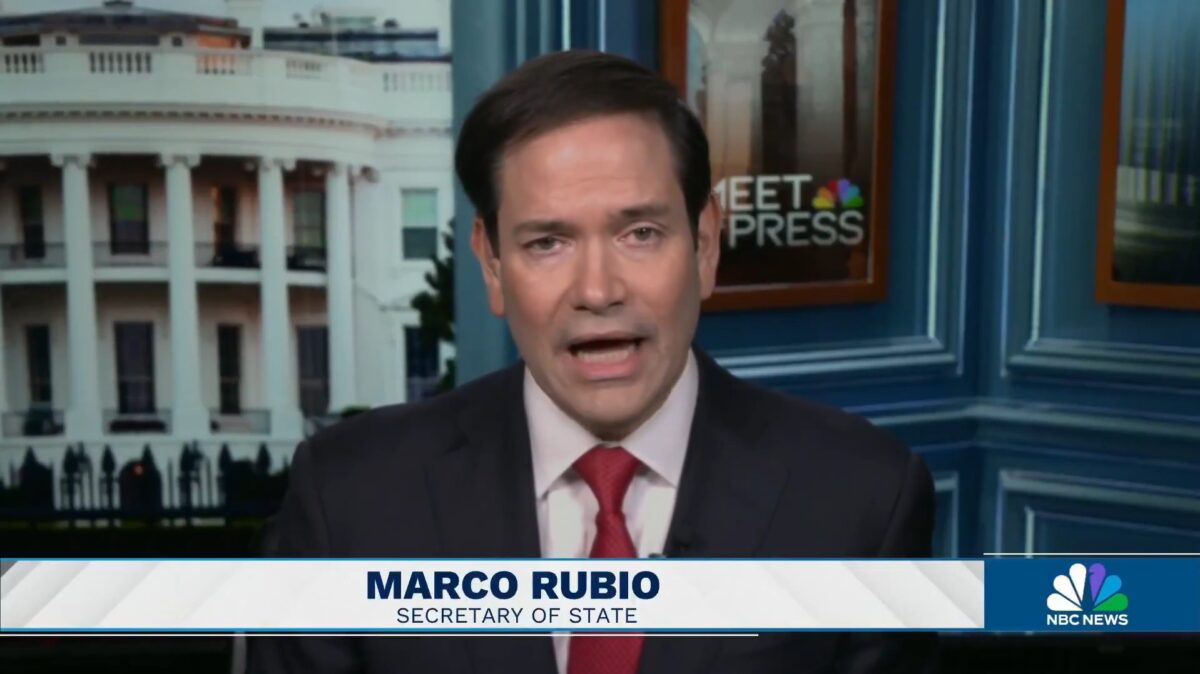

Secretary of State Marco Rubio delivered a stark assessment of communist Cuba this week, declaring during an appearance on Sean Hannity’s program that “Cuba has fallen.”
Rubio was not announcing the collapse of Miguel Díaz-Canel’s government. Cuba’s Communist Party remains in power. Rather, the secretary was arguing that the economic and political model created by the Cuban Revolution has reached a profound crisis after decades of dependence on foreign patrons. Fox News aired Rubio’s remarks on September 29.
Sec Marco Rubio: Cuba has fallen pic.twitter.com/DTVfdhkKDO
— Sean Hannity 🇺🇸 (@seanhannity) September 29, 2026
The distinction matters because Washington increasingly views Cuba’s troubles as both a humanitarian problem and a national-security concern.
Cuba has endured severe shortages of fuel, food and medicine, widespread electrical outages and extraordinary levels of emigration. Its longstanding economic relationship with Venezuela has also been badly disrupted. Reuters reported earlier this year that Venezuelan oil had been crucial to Cuba, even as shipments declined in recent years.
Rubio’s argument is that Havana spent decades keeping its system afloat with outside assistance, first from the Soviet Union and later through its relationship with Venezuela. With that support badly weakened, the Cuban government faces circumstances considerably different from those of previous crises.
“What they’re no longer going to do, as long as Donald Trump is President, is they’re no longer going to be able to steal money and make money off the backs of the Cuban people,” Rubio said in remarks promoted by the State Department.
Rubio also framed Cuba as a security issue because of its proximity to the United States. The administration’s position is that Washington cannot ignore the possibility of a severely weakened state roughly 90 miles from Florida becoming a platform for hostile foreign powers or other threats.
The Cuban government rejects Washington’s characterization. Havana has denied that it poses a threat to the United States and has condemned American sanctions and pressure as interference in Cuban sovereignty. Cuban officials have also indicated a willingness to discuss some issues with Washington while rejecting negotiations over changing Cuba’s political system.
That disagreement gets to the heart of the confrontation.
The Trump administration argues that Cuba’s centralized political and economic system has contributed heavily to the island’s predicament. Havana, meanwhile, has long blamed U.S. sanctions for worsening economic hardship. Outside analysts generally point to multiple factors, including sanctions, domestic economic policies, declining productivity, energy shortages and the loss of support from allies.
President Trump has intensified economic pressure on Cuba during his second term, including measures aimed at restricting the oil reaching the island. Critics warn that further pressure could deepen suffering among ordinary Cubans, while administration officials argue that outside support has historically helped Havana preserve the existing system.
Rubio’s declaration therefore represents something larger than a memorable television soundbite.
When he says “Cuba has fallen,” he is describing the administration’s assessment that the revolutionary economic model has failed, not announcing that Cuba’s government has ceased functioning.
The government in Havana remains firmly in place. Whether its current economic crisis eventually produces political reform, greater repression, negotiations with Washington or another period of survival remains unresolved.
Sources: Fox News, Reuters, Council on Foreign Relations, Wall Street Journal.
Leave a Comment