
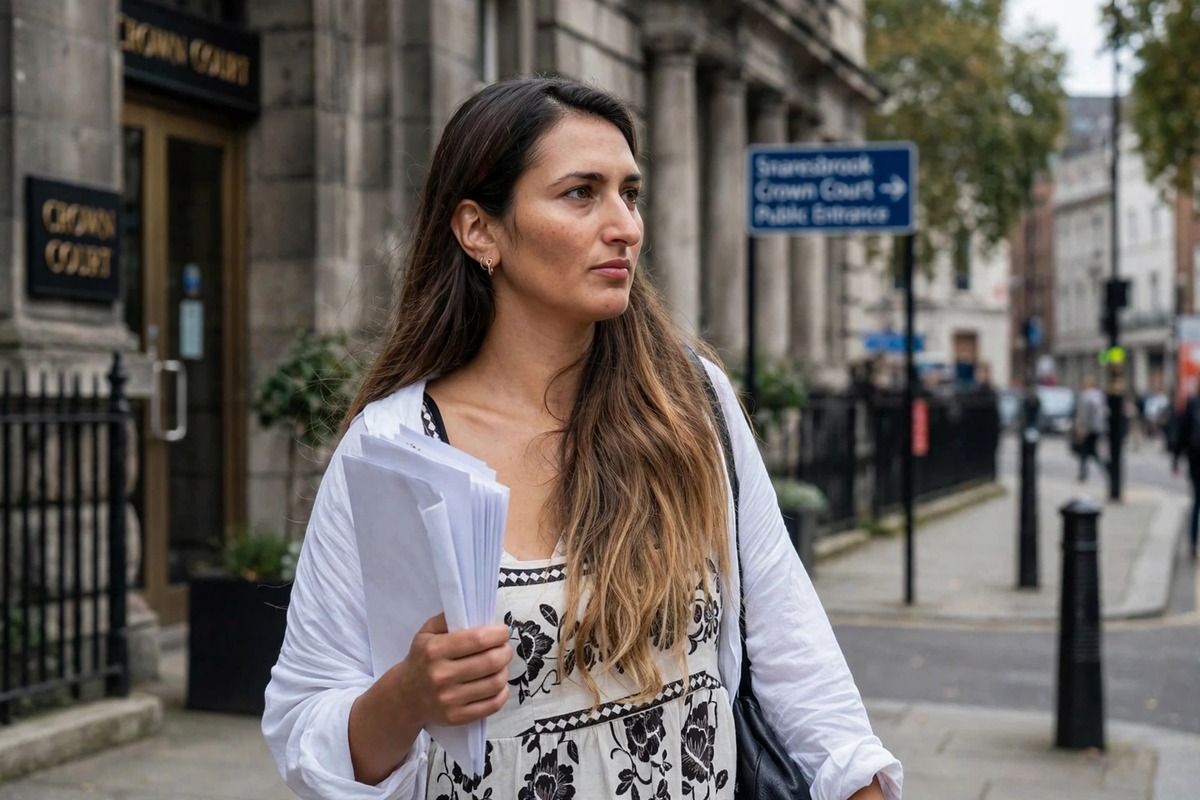

The Supreme Court turned away a major Second Amendment challenge from Maryland, but the decision was hardly a victory lap for the state’s gun-control politicians. Justice Clarence Thomas used the denial to warn that sweeping bans making lawful carry nearly impossible across ordinary public life may have serious constitutional problems.
The case was Novotny v. Moore, a challenge to Maryland laws that prohibit permit holders from carrying firearms in a long list of so-called “sensitive places.” The restrictions cover public demonstrations, mass transit, entertainment venues, healthcare facilities, businesses that serve alcohol, and tens of thousands of acres of state parks and forests.
The Supreme Court denied review without oral argument, leaving the Fourth Circuit’s judgment governing Maryland permit holders in place for now. That sounds helpful to Maryland officials, but the Court did not issue a constitutional endorsement of the state’s entire location-ban strategy. Apparently, placing the words “sensitive places” on a long list does not automatically end the constitutional debate.
Supreme Court turns down DEI-related disputes and Second Amendment challenge to gun bans in “sensitive places”
Supreme Court turns down DEI-related disputes and Second Amendment challenge to gun bans in “sensitive places”https://t.co/qQ1VhagsaQ
— SCOTUSblog (@SCOTUSblog) November 16, 2026
The challengers argued that Maryland’s rules turn broad areas of ordinary public life into gun-free zones, even for law-abiding citizens with permits who want a firearm for self-defense. Their petition challenged multiple statutes and several different categories of locations in one package.
Thomas agreed that the case was too broad for the Court to review cleanly. Each category, he explained, could raise a different historical question. A focused challenge involving one type of location would give the justices a clearer record to examine instead of forcing them to sort through transit, parks, alcohol-serving businesses, demonstrations, and entertainment venues all at once.
Then came the part Maryland officials should not ignore. Thomas wrote that he has “serious doubts” that the nation’s history supports many of these restrictions. He pointed to Supreme Court precedent recognizing a limited tradition of regulating firearms in genuinely sensitive locations, not a blank check allowing states to declare nearly every place where people gather off-limits.
That concern goes directly to the promise of Bruen, which recognized that law-abiding citizens have a right to carry arms in public for ordinary self-defense. Maryland’s patchwork rules force those citizens to disarm across daily life while insisting that the constitutional right still exists. A right that disappears on public transportation, in parks, at entertainment venues, and in many businesses starts looking suspiciously like a privilege available only on paper.
The Firearms Policy Coalition identifies the plaintiffs as three individual Marylanders, Maryland Shall Issue, the Second Amendment Foundation, and FPC. Their lawsuit challenged restrictions enacted after Bruen rejected discretionary carry systems that treated public self-defense as a special privilege. The coalition’s case history describes years of litigation over Maryland’s effort to preserve sweeping location bans.
Gun-rights advocates are framing the fight as part of a broader national battle. The Firearms Policy Coalition said, “It’s a BIG week for the fight to end gun bans nationwide. We’re fighting for a decisive ruling that protects your right to own these arms in every state. Let’s get to work.”
It’s a BIG week for the fight to end gun bans nationwide.
We’re fighting for a decisive ruling that protects your right to own these arms in every state.
Let’s get to work. pic.twitter.com/Su6WaelZuR
— Firearms Policy Coalition (@gunpolicy) November 16, 2026
Gotta get that work in for Oral Arguments on Dec 2nd. pic.twitter.com/gjhS3KIgPZ
— Firearms Policy Coalition (@gunpolicy) November 16, 2026
The timing also matters. The Associated Press reports that the justices are preparing to hear arguments over state and local bans on AR-15-style rifles. The same conservative-majority Court has issued major rulings protecting the right to keep and bear arms while allowing certain historically grounded restrictions.
For now, Maryland’s lower-court judgment remains in effect. But Thomas’s statement gives gun-rights lawyers a clear strategy: return with a narrower case aimed at a specific restriction and a specific historical record. This denial looks more like case selection than surrender, and Maryland’s broad gun-free-zone experiment remains very much under constitutional pressure.
Source: WLTReport

Leave a Comment