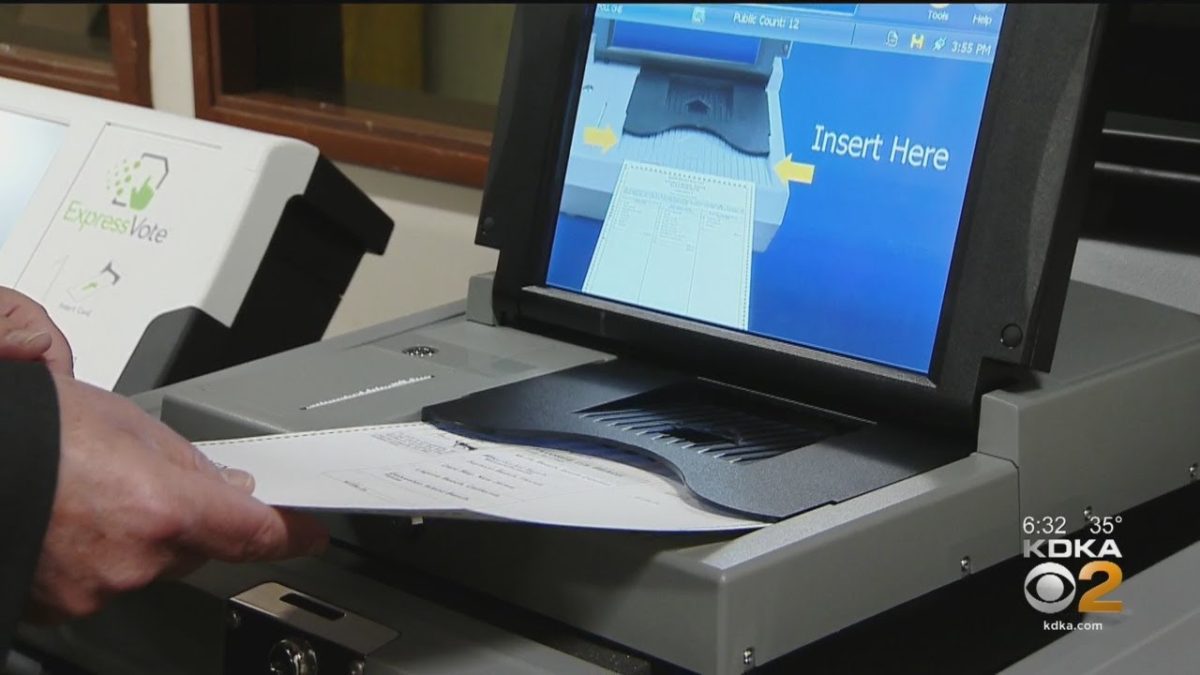

The Department of Homeland Security is preparing to deploy federal investigators across nine states as part of a major voter fraud enforcement initiative beginning September 1, bringing additional scrutiny to election security just weeks before the 2026 midterms.
Homeland Security Investigations, the investigative arm of Immigration and Customs Enforcement, will reportedly launch what officials are calling a “coordinated criminal voter fraud surge initiative.”
According to internal federal guidance reviewed by CNN, the operation is expected to continue through mid-October.
Investigators will pursue leads, conduct interviews and develop potential criminal cases for referral to prosecutors.
The nine states reportedly targeted for investigative activity are California, Connecticut, Georgia, Missouri, Nevada, New York, Pennsylvania, Washington and Wisconsin.
Several are major political battlegrounds, while others are heavily Democratic states.
The operation represents another expansion of the Trump administration’s efforts to investigate allegations that noncitizens have illegally registered to vote or participated in American elections.
HSI traditionally handles crimes such as human trafficking, narcotics smuggling and child exploitation. Under President Trump, however, the agency has taken an increasingly active role in election-related investigations involving suspected noncitizen voting.
The timing will inevitably attract attention.
Federal prosecutors have historically been discouraged from taking unusually visible investigative actions immediately before elections when those actions could influence voting or political campaigns. That Justice Department policy does not directly control DHS operations, however, and the reported DHS guidance does not mention those traditional election-season concerns.
The administration argues that election laws do not become optional simply because Election Day is approaching.
Homeland Security Secretary Markwayne Mullin has become a prominent administration voice on the issue, with DHS pressuring states to cooperate with federal reviews of voter registration records.
“If you’re illegal and attempted to vote, or you tried to vote illegally for someone else, we will find you, and we will charge you,” Mullin told reporters in July.
DHS has already publicized criminal cases involving alleged illegal voting.
Earlier this month, the department announced charges against Chinese national Yupeng Sun following an HSI investigation. Prosecutors alleged that Sun impersonated another Chinese national while registering to vote in Massachusetts and subsequently submitted an early ballot during the 2024 presidential election.
The broader debate concerns how widespread such violations actually are.
DHS previously said a preliminary review identified more than 250,000 potential noncitizens on voter rolls across California, Pennsylvania, New Jersey and Nevada.
State officials challenged those numbers and questioned the department’s methodology. Subsequent reporting concerning Nevada indicated that the initial figure was considerably less definitive after further examination, with only a fraction classified as confirmed matches.
Election experts and voting-rights organizations argue that documented noncitizen voting is rare. They have also warned that database comparisons can produce false matches and potentially subject lawful voters to unnecessary scrutiny.
The administration takes a different position: rarity is not a reason to ignore a federal crime.
That argument is straightforward. American elections are legally reserved for eligible voters, and citizenship requirements for federal elections do not contain an exception saying violations only matter after reaching some predetermined numerical threshold.
At the same time, investigators have a responsibility to distinguish carefully between a preliminary database match and evidence that somebody actually registered or voted illegally. A suspicious record is not automatically a guilty person.
With control of Congress on the line in November, the political reaction to federal investigators entering battleground states will undoubtedly be intense.
The administration nevertheless appears prepared to move ahead.
Beginning September 1, Mullin’s warning will no longer simply be rhetoric from a press conference. Federal investigators will be on the ground looking for cases.
Leave a Comment