
The NAACP’s eleventh-hour effort to stop President Trump’s Justice Department’s nationwide Election Day monitoring operation has hit a judicial wall. U.S. District Judge Reggie Walton denied the group’s request for a temporary restraining order, allowing the department’s roughly 1,000 monitors and observers to remain in the field across all 50 states.
That ruling is a major defeat for an effort that sought to sideline what the DOJ described as the largest election-monitoring operation in its history, on the day Americans are choosing control of Congress. The department says this is the first time it has placed monitors in all 50 states. Its stated job is to observe polling-place procedures, assess compliance with federal voting laws, and help protect access to the ballot. In other words, the government announced the mission and explained the ground rules instead of sneaking around and hoping nobody noticed.
Assistant Attorney General Harmeet Dhillon described the scale Tuesday morning: “Happy Election Day! @CivilRights is sending 1,000+ monitors & observers to all 50 states to help ensure a free & fair election. Every American’s vote should count.”
Happy Election Day! @CivilRights is sending 1,000+ monitors & observers to all 50 states to help ensure a free & fair election. Every American’s vote should count. If you see any issue, report it to your local election officials or the Division at 1-800-253-3931 or [email protected].…
— AAGHarmeetDhillon (@AAGDhillon) November 3, 2026
The NAACP argued that personnel drawn from agencies including the Bureau of Prisons, the Drug Enforcement Administration, and the Bureau of Alcohol, Tobacco, Firearms and Explosives could intimidate voters. Walton found those concerns were not enough to justify blocking the program after the government explained who would serve as monitors and what they were allowed to do.
In his 11-page order, Walton wrote that the record did not show a likely Voting Rights Act violation under the safeguards presented at Monday’s hearing. The assigned personnel must be administrative or clerical workers, not sworn officers with arrest power. They cannot carry firearms, wear uniforms, or display law-enforcement insignia.
Those restrictions undercut the claim that the monitors’ presence would create an objectively reasonable fear that could keep voters away. The court was not persuaded that plainclothes personnel observing and taking notes, without weapons or arrest authority, amounted to the kind of intimidation the NAACP alleged. That is a fairly important distinction, especially when the alternative is pretending federal election law should be observed only when nobody complains.
The order also requires monitors to obey state and local rules, avoid interfering with voters or election officials, refrain from speaking with voters inside polling places, and identify themselves to local election officials when they arrive. DOJ personnel may observe procedures and record what they see, but they cannot interfere with election workers. They must carry federal credentials that can verify their employment if asked.
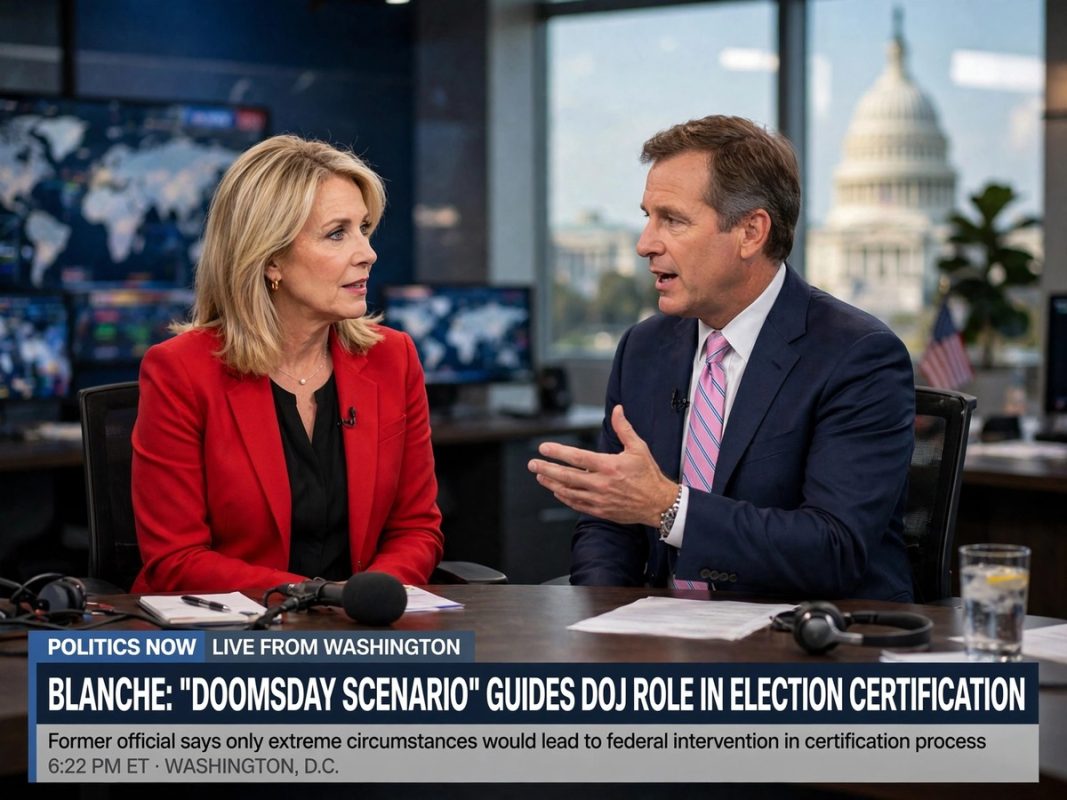
Attorney General Todd Blanche said before polls opened, “Election Day is tomorrow. The Department of Justice expects all federal election laws to be followed.” He also directed allegations of illegal conduct, including noncitizens voting, double voting, and ballot-box stuffing, to the FBI’s reporting line.
Election Day is tomorrow. The Department of Justice expects all federal election laws to be followed. If you have a tip on illegal conduct—including but not limited to noncitizens voting, double voting, and ballot-box stuffing—contact the FBI: 1-800-Call-FBI or…
— Attorney General Todd Blanche (@AGToddBlanche) November 2, 2026
The Justice Department provided voters with a Civil Rights Division reporting line and directed allegations of election crimes to the FBI. It also released a public list of jurisdictions and channels for reporting problems. That makes this a visible operation with enforceable limits, not an excuse for monitors to play cop inside polling places.
Walton denied the NAACP’s motion without prejudice and required DOJ to report by 7 a.m. Tuesday how it confirmed that the monitors were not law-enforcement officials and did not possess arrest authority. The plaintiffs can return to court immediately if monitors violate those limits.
The ruling leaves the mission intact while making the government’s promised ground rules enforceable. Elections should be accessible, and federal voting laws should be followed. Those objectives are perfectly compatible, despite the latest attempt to turn a set of restrictions on federal observers into a courtroom emergency.
🚨 ELECTION DAY PSA 🚨
• If you encounter violence, threats, or intimidation at a polling place, call 911 immediately.
• If you believe you or someone else has experienced a civil rights violation, please contact the Civil Rights Division at 800-253-3931 or 202-307-2767.
— U.S. Department of Justice (@TheJusticeDept) November 3, 2026

Leave a Comment