
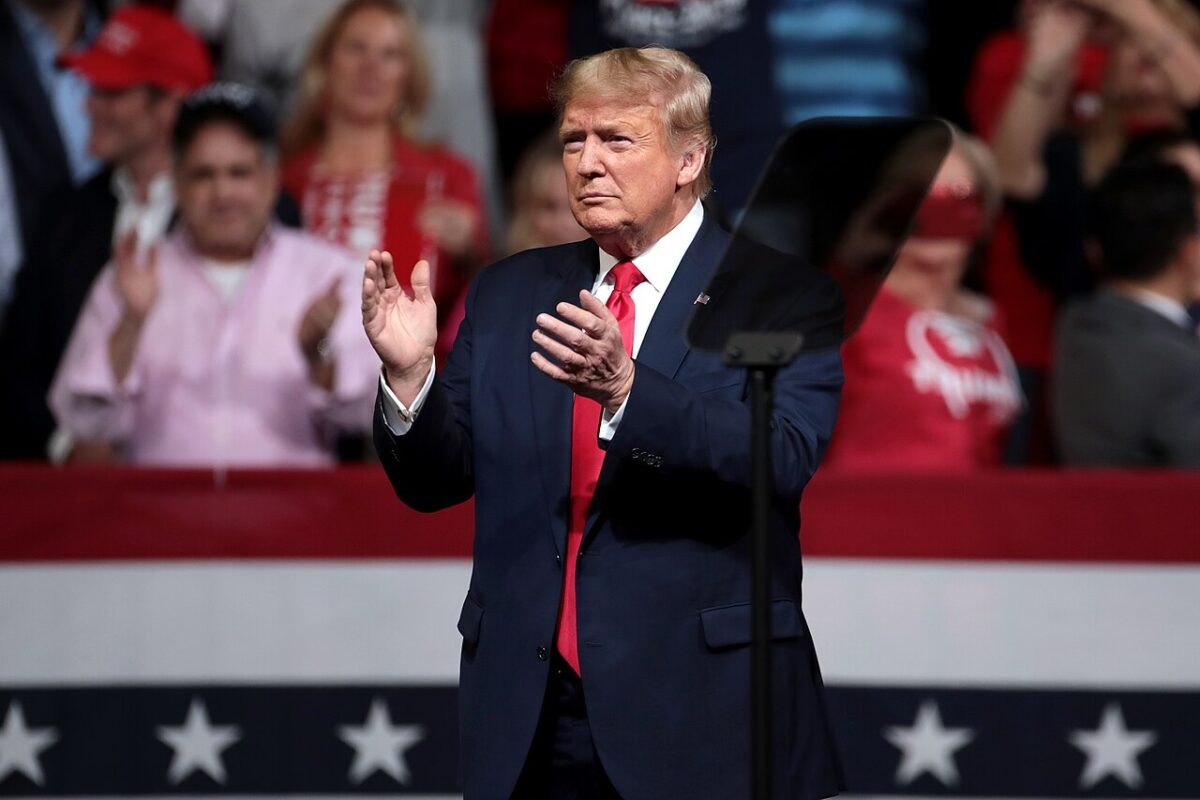

Republicans are trying something new in 2026, bringing the spectacle and national attention normally associated with a presidential nominating convention into the middle of a congressional election year.
The Republican Party’s first national midterm convention opened Wednesday at the American Airlines Center in Dallas, with President Trump, Vice President JD Vance, congressional leaders, administration officials and candidates gathering for a two-night event designed to focus attention on the November elections.
Unlike the familiar convention held every four years, Republicans have no presidential nominee to select and no major piece of formal party business to conduct. Instead, the Dallas gathering is essentially a giant campaign event designed to promote Republican candidates, highlight the administration’s record and present the party’s arguments for maintaining control of Congress.
President Trump has made himself central to that strategy. He previously described the Dallas gathering as a “mini convention” and said the idea originated with him. His schedule has him attending the convention Wednesday and Thursday, including a prominent speaking role.
The scale is unusual for a midterm year.
According to the official convention schedule, organizers planned 109 speakers and segments across the two nights, with 53 on Wednesday and another 56 on Thursday. That is quite a production for an election year that normally does not get anything resembling a national convention.
The agenda covers taxes, immigration, education, health care, manufacturing, energy, government spending and public safety, among other issues Republicans intend to emphasize during the final stretch before November.
The lineup includes congressional leaders, Cabinet officials and Republican candidates from around the country.
House Majority Leader Steve Scalise and Majority Whip Tom Emmer are part of Wednesday’s program, along with Treasury Secretary Scott Bessent, Attorney General Todd Blanche, Florida gubernatorial candidate Byron Donalds and Texas Senate candidate Ken Paxton.
House Speaker Mike Johnson, Sen. Tim Scott, Sen. Ted Cruz and other prominent Republicans are also scheduled to participate, while Vice President JD Vance has a prime-time role Thursday.
The setting is politically significant as well.
Texas is hosting major contests this year, including the Senate race between Republican Ken Paxton and Democrat James Talarico. Several House races in the state could also play a role in determining control of Congress.
Holding the convention in Dallas therefore accomplishes several things simultaneously. Republican candidates get national media exposure, donors and activists have a central gathering place, and President Trump gets an enormous platform for making his case about what Republican control of Washington has produced.
Democrats are not ignoring the gathering.
Democratic lawmakers are traveling to Dallas for counter-programming, where they are expected to criticize President Trump’s record and Republican policy positions. In other words, even without a presidential nomination on the agenda, Dallas has temporarily become a major battlefield in the national political argument.
Republicans are using the convention to emphasize border enforcement, lower taxes, school choice, energy production, manufacturing, national security and reductions in government spending. Democrats, meanwhile, are presenting their own arguments on the economy, health care, immigration and the administration’s record.
That is what makes the experiment interesting.
Midterm elections are traditionally hundreds of individual contests loosely connected by national political trends. Presidential elections get the balloons, giant stages, prime-time speeches and weeklong television productions. Midterms usually get campaign stops and attack ads.
President Trump and the Republican National Committee are attempting to change that formula.
The Dallas convention effectively nationalizes the Republican midterm campaign by placing President Trump and his administration’s record alongside House, Senate and gubernatorial candidates from across the country.
There is no nominee to crown and no suspense about who gets the presidential ticket. The purpose is political messaging, voter enthusiasm and organizational muscle heading into November.
Whether the strategy ultimately helps Republican candidates is something voters will decide. But as political experiments go, turning an ordinarily fragmented midterm campaign into a two-night national convention is certainly a major departure from business as usual.
Leave a Comment