
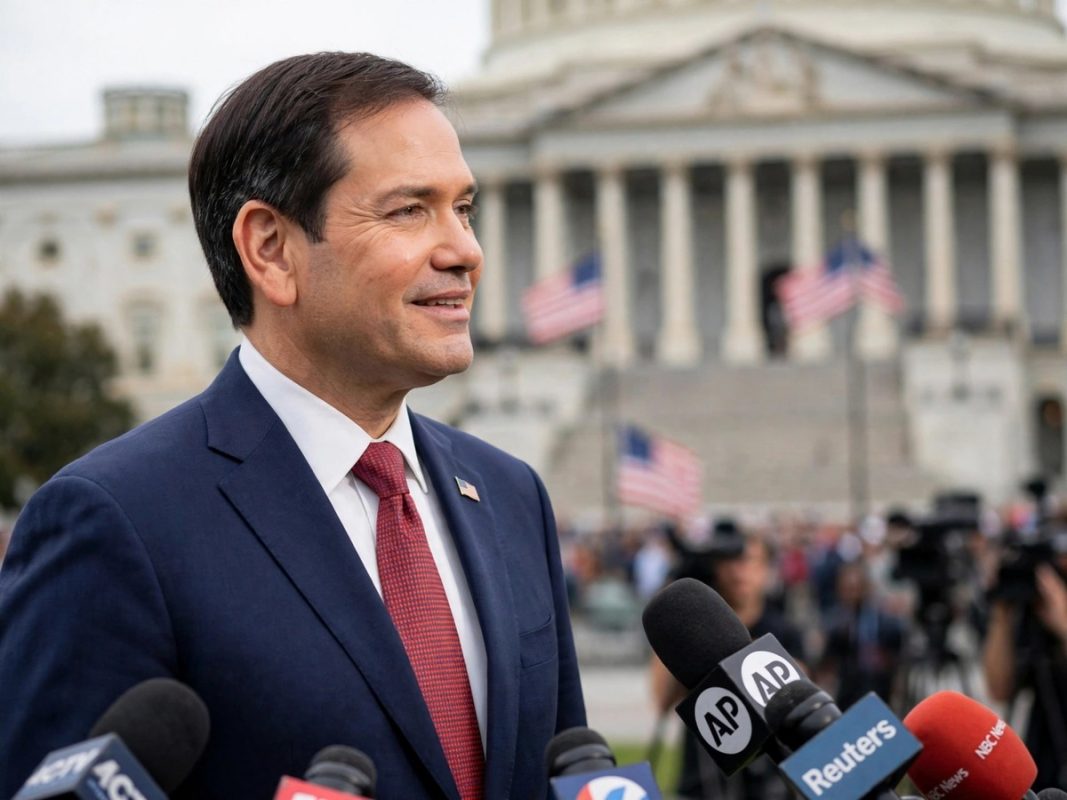

The 2028 Republican primary is already taking shape, even before the midterm dust has settled. Rep. Marlin Stutzman of Indiana, one of the original members of the House Freedom Caucus, has made his choice for president. He is not backing Vice President JD Vance. Stutzman says he is “all in” for Secretary of State Marco Rubio, describing Rubio as a Trump administration heavyweight who could help unite the party after a brutal election night.
That endorsement arrives with Republicans still arguing over what went wrong. Vance offered a blunt diagnosis, saying party strategists focused too heavily on whether the electorate resembled 2024 and missed voters who had turned against the GOP. He said data analysts obsessed over the “composition” of the electorate, while the voters themselves were busy changing their minds. In plain English, the campaign math may have looked comforting until actual voters delivered the bill.
Vance laid out that argument in a post:
One of the things the data analysts on our side obsessed over was "composition"—whether the electorate looked close enough to 2024 for Republicans to win. And despite polls that showed a Democrat blowout, the data kept on telling us the same story: in some states turnout was…
— JD Vance (@JDVance) November 4, 2026
Fox News reports that Stutzman made his endorsement while urging Republicans to rethink how they communicate with voters after losing control of Congress. He said the rebuilding process should begin now, not after the next presidential campaign is already underway. Washington usually manages to turn a policy debate into a vocabulary workshop, so at least Stutzman is putting a specific proposal on the table.
Stutzman also argued that Republicans should take credit for closing the border while changing the next phase of their immigration message. His proposal would emphasize work visas, without citizenship, for people in the country illegally who are otherwise obeying the law. For a Freedom Caucus conservative, that is a significant marker and a clear sign that the party’s next debate will involve more than campaign slogans.
Rubio has spent years moving between the Republican establishment and the America First wing. Stutzman is betting that experience can become an asset rather than a liability. Rubio’s supporters will argue that the party needs discipline, experience and a candidate capable of holding its competing factions together.
Vance remains the natural early favorite. He has the vice presidency, deep support in the MAGA movement and a close relationship with the Trump family. Donald Trump Jr. immediately amplified Vance’s post-election argument, giving the vice president’s diagnosis a larger audience.
Every word of this is 💯💯💯 https://t.co/EigF8EQYXU
— Donald Trump Jr. (@DonaldJTrumpJr) November 4, 2026
Axios reports that Vance blamed the Iran war for the losses and identified four demands he believes disaffected Trump voters are making: end the war, confront the cost of living, put America First and reconsider the nation’s relationship with Israel. President Trump publicly said Vance’s post was fine, although the message surprised some people inside the White House.
That puts Rubio and Vance on opposite sides of the most immediate Republican argument. Vance is presenting himself as the candidate who understands why parts of the MAGA coalition walked away. Rubio’s supporters will make the case that the party needs a unifier who can bring its competing factions back into the same room. Naturally, the room is already getting crowded.
Former House Speaker Newt Gingrich sees the size of the defeat as enough to open the nomination race. He argued that a Republican victory would have made Vance look inevitable, but the election changed that calculation. Gingrich wrote, “The scale of the Republican defeat is so great that it makes the race for the GOP presidential nomination wide open.”
The scale of the Republican defeat is so great that it makes the race for the GOP presidential nomination wide open.
If the administration had won a big victory, Vice President J D Vance would have had an enormous argument to be the inevitable nominee.
Now, with this go-slow…
— Newt Gingrich (@newtgingrich) November 4, 2026
Stutzman’s endorsement does not decide the nomination by itself. It does show that prominent conservatives are no longer treating a Vance nomination as a foregone conclusion. Republicans now have two years to prove they heard the voters. The eventual nominee will have to do more than inherit President Trump’s coalition; that nominee will have to rebuild it. After an election loss, everyone suddenly has a theory. The harder task is turning those theories into a message voters will actually accept.
Leave a Comment