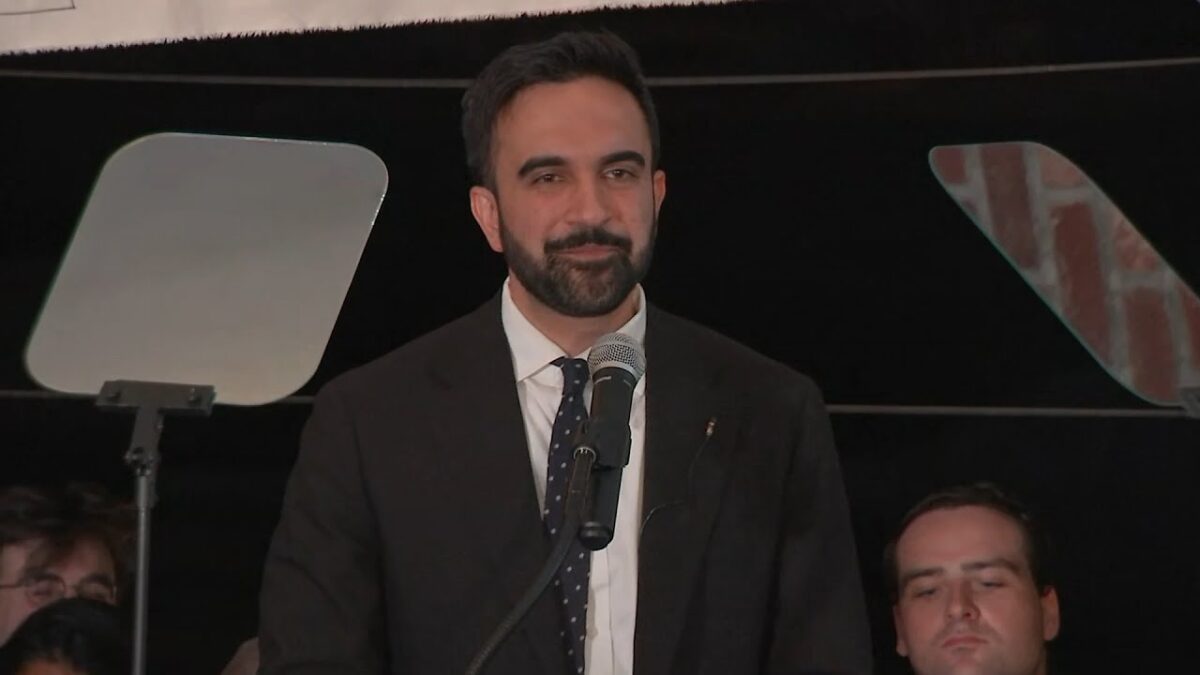

New York City Mayor Zohran Mamdani’s plan to put City Hall into the grocery business is already headed for a courtroom, as supermarket owners argue that taxpayer-subsidized municipal stores would leave private businesses competing against the same government collecting their taxes.
That is quite a business model. Pay taxes to City Hall, then watch City Hall use public money to compete against you.
Two lawsuits have reportedly been filed challenging Mamdani’s government-owned grocery initiative, which is expected to cost taxpayers roughly $70 million to establish. The planned stores would sell basic groceries such as produce, meat, milk, cheese and bread at discounts reportedly reaching 30 percent.
City Hall projects those discounts could save participating shoppers around $90 per month, or roughly $1,000 annually.
Lower grocery bills certainly sound attractive. The question is who actually pays for those savings, and what happens to neighborhood supermarkets forced to compete against stores backed by taxpayers rather than ordinary investors.
Plaintiffs organized under the Multicultural Business Coalition argue that the policy threatens privately owned supermarkets, including stores operated by immigrant and minority entrepreneurs.
New York supermarkets sue over Mamdani’s municipal grocery storeshttps://t.co/4Xm0BKcvi0
— The Hill (@thehill) August 24, 2026
“Plaintiffs have been denied equal protection where the Plaintiffs, predominately immigrant and minority owned grocery stores, are unable to offer similarly discounted products of the NYC-GP,” attorneys argued in one lawsuit.
The complaint alleges that the government-supported stores would receive an advantage that private competitors simply cannot match.
A second lawsuit reportedly argues that the Mamdani administration failed to adequately analyze how heavily discounted municipal supermarkets could affect existing businesses. According to the New York Post, plaintiffs say the city “failed to study the discriminatory effects” on family-owned grocery stores and bodegas operated by Hispanic, Arab and Asian New Yorkers.
That creates an awkward political picture for an administration selling the program as a helping hand for working-class residents. Small business owners are now arguing that the helping hand could land directly on their necks.
Mamdani, however, is standing behind the proposal.
“I’m confident both in the legality of this, that it will stand up in court and the importance of delivering it,” the mayor said when questioned about the lawsuits.
Supporters of municipal grocery stores argue that government involvement could bring affordable food to neighborhoods where residents struggle with high prices or limited supermarket options. Mamdani’s plan is built around removing some of the expenses and profit pressures facing conventional retailers, allowing city stores to charge less.
But that supposed advantage is exactly what private grocers are challenging.
A family-owned supermarket has to pay employees, rent, insurance, utilities, suppliers and taxes while still generating enough revenue to survive. A government operation can theoretically absorb losses through taxpayer support. Calling that ordinary “competition” requires a fairly creative definition of the word.
There is also the longer-term question. If subsidized stores undercut neighborhood businesses until some close, New Yorkers could eventually find themselves with fewer private choices and a larger government role in something the private sector has handled for generations.
New York already has plenty of responsibilities for City Hall to manage. Whether stocking milk, bread and hamburger meat should become another one is now a question for the courts, taxpayers and the small business owners being asked to compete with their own government.
Leave a Comment