
James O’Keefe put Alaska’s election procedures under a microscope this week after releasing hidden-camera footage showing election workers offering questioned ballots to people who said they had no identification.
The O’Keefe Media Group founder conducted the test during Alaska’s August 18 primary election, using the names of people connected to Sen. Lisa Murkowski. O’Keefe says neither he nor his team actually voted under those names, but the encounters raise questions about how Alaska handles voters who arrive at polling locations without identification.
At one polling place, O’Keefe gave workers the name Brian Murkowski, identified in the report as Sen. Murkowski’s brother.
“The last name is M U R K O W S K I. I left my wallet in the vehicle. Would it be possible to vote without it?” O’Keefe asked.
“Absolutely possible,” the worker replied.
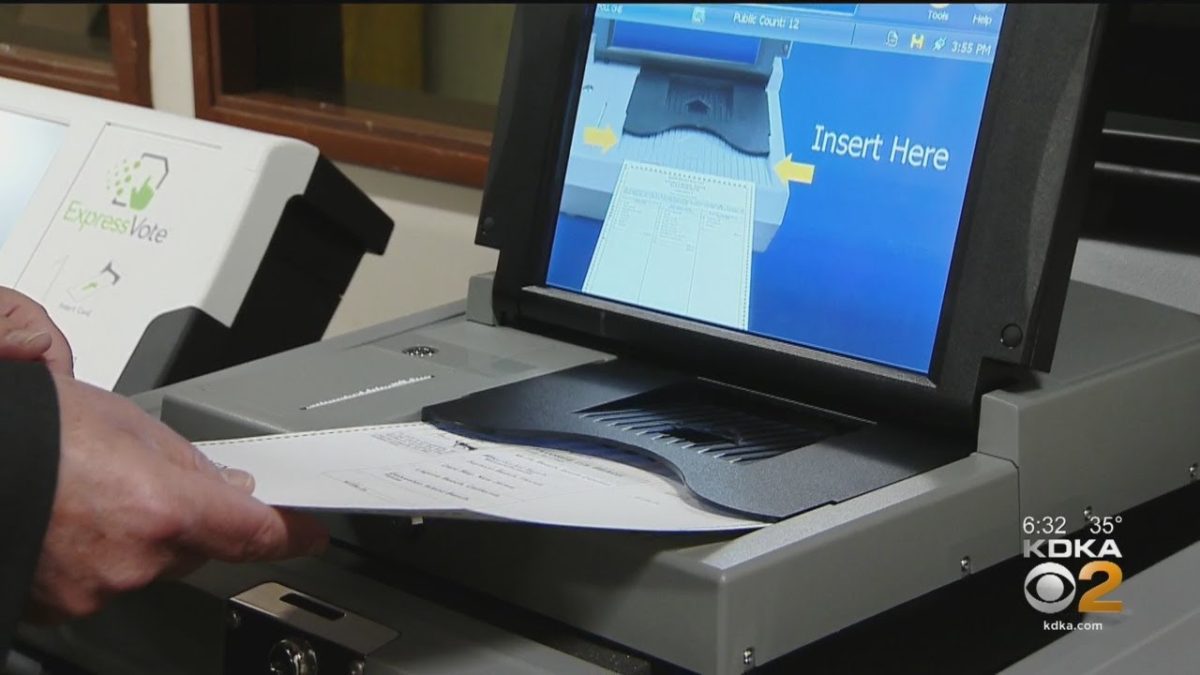
The worker then explained that O’Keefe could use a questioned ballot.
“You can vote if you’d like to. Do you want to do a question ballot?” the worker asked.
O’Keefe replied, “I mean, all I got to do is do the question ballot, then I can vote.”
BREAKING NEWS: O'Keefe Offered Senator Lisa Murkowski's Brother Ballot at Alaskan Polling Location With No ID Required
Anchorage Polling Worker Also Offers Lisa Murkowski’s State Director, Karina Waller's Ballot Without ID on August 18th, Primary Election Day
Murkowski Opposes… pic.twitter.com/ewC7LdTM9R
— James O'Keefe (@JamesOKeefeIII) August 20, 2026
According to O’Keefe Media Group, workers found Brian Murkowski’s name on the voter rolls. O’Keefe says he stopped short of checking in under that identity, signing election paperwork or casting a ballot.
A similar test was conducted at another Anchorage location. An O’Keefe Media Group team member reportedly supplied the name Karina Waller, identified as Sen. Murkowski’s state director, and said no identification was available. A worker reportedly confirmed the polling location and again offered a questioned ballot.
Now, before anyone declares that Alaska simply allows people to stroll into a precinct, borrow somebody else’s name and casually pick the next governor, there is an important legal detail.
Alaska law generally requires voters to present identification. The list of acceptable documents is broad, including driver’s licenses, state IDs, passports, voter registration cards, hunting or fishing licenses and certain financial or government documents.
But Alaska Statutes section 15.15.225 also says a voter who cannot provide the required identification “shall be allowed to vote a questioned ballot.”
That ballot isn’t automatically treated like an ordinary verified ballot. It is segregated and subjected to additional review before officials determine whether it can be counted.
So the hidden-camera footage does not, by itself, establish that somebody can successfully cast and have counted an illegal impersonation ballot simply by knowing another voter’s name.
It does demonstrate something politically important, however: Alaska’s system can allow a person without identification to receive a ballot, with eligibility verification occurring afterward.
For voters who believe identification should be confirmed before a ballot leaves an election worker’s hands, that arrangement is naturally going to produce some raised eyebrows.
The report also claimed Brian Murkowski remained registered despite not residing in Alaska, bringing voter-roll maintenance into the controversy as well. Maintaining accurate voter rolls is a separate responsibility handled through Alaska’s election administration procedures.
Sen. Murkowski’s office responded before publication by emphasizing that she supports photo identification requirements.
“Senator Murkowski has consistently supported the requirement of photo ID to vote and earlier this month she voted in favor of a separate measure on the Senate floor to do just that,” her office said.
Her office nevertheless defended her opposition to the federal SAVE Act, describing it as “an overly burdensome one-size-fits-all mandate from Washington.”
“It would be impossible to implement in time for this election and would likely disenfranchise thousands of eligible Alaskan voters,” the statement continued. “In any case, voter impersonation is a crime and should be prosecuted to the fullest extent of the law.”
That response highlights the actual policy dispute.
Murkowski argues that Alaska’s enormous geography and remote communities make uniform federal documentation requirements especially difficult. Supporters of tougher election-integrity requirements argue that verifying identity and eligibility before issuing a regular ballot is hardly an unreasonable expectation.
O’Keefe’s footage doesn’t prove that fraudulent votes were counted in Alaska’s primary, and his team says it deliberately did not cast ballots under other people’s identities.
What it does provide is a real-world demonstration of how Alaska’s questioned-ballot procedure operates when someone appears without identification and supplies a registered voter’s name.
Election laws tend to sound wonderfully airtight when they’re printed in statute books. Hidden-camera tests have a way of showing voters what those rules look like when actual human beings are standing behind the folding tables.
And that is exactly why election procedures deserve scrutiny before an election becomes close enough for everyone to suddenly start caring about them.
Leave a Comment