
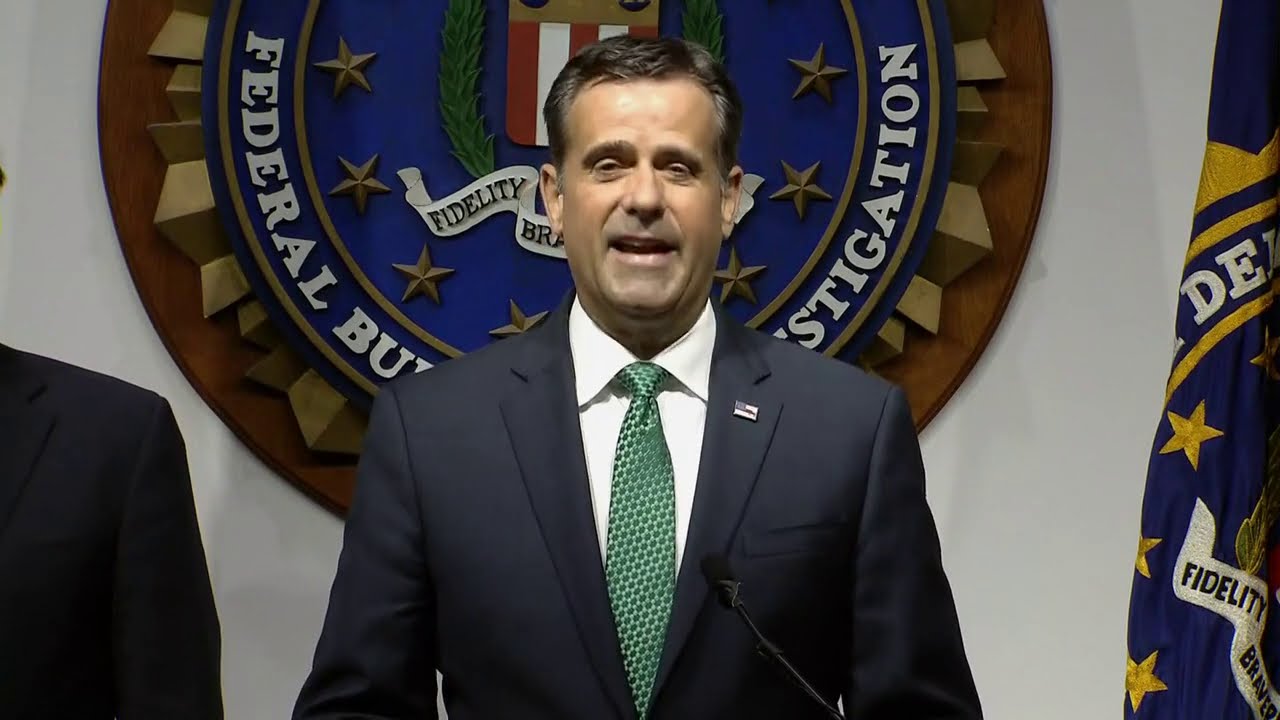

CIA Director John Ratcliffe’s surprise trip to Moscow this week reportedly had a considerably more serious purpose than diplomatic housekeeping, with sources saying the intelligence chief traveled to Russia to warn Moscow against attacking a NATO country.
According to the Wall Street Journal, people briefed on the matter said Ratcliffe’s mission was connected to recent U.S. intelligence assessments suggesting Russian President Vladimir Putin could attempt a limited attack against a NATO member in the coming years. Such an operation, according to that assessment, could be designed to test whether the alliance would actually respond collectively when confronted with Russian aggression.
President Trump, however, did not publicly confirm that account.
Speaking with Glenn Beck on the same day the Journal report emerged, President Trump described Ratcliffe’s visit as “sort of semi-routine.” When asked whether the trip concerned a warning about NATO, possible strikes involving England or sanctions against Iran, President Trump responded that it involved “none of the above.”
BIG: CIA Director John Ratcliffe made a surprise visit to Moscow this week to warn Russia not to attack NATO countries.
The visit followed new U.S. intelligence assessments suggesting Putin could try to test NATO’s resolve with a limited attack on an allied country in the… pic.twitter.com/APIugMIQ1n
— Clash Report (@clashreport) August 26, 2026
President Trump did leave the door open to developments resulting from the secretive discussions.
“Something may come out of it,” he said, while adding that his administration was “working very hard to get that war ended,” referring to Russia’s ongoing war in Ukraine.
Ratcliffe reportedly arrived in Moscow on Aug. 25 aboard a U.S. Air Force Boeing C-17A Globemaster III transport aircraft after traveling through Riga, Latvia. CBS News reported that flight-tracking information showed the aircraft traveling from Riga to Moscow and then returning to Latvia.
Axios reported that two American officials confirmed the visit, making it the highest-level known trip to Russia by an official in the Trump administration since January 2026.
The United States also reportedly informed Ukraine beforehand that a senior American delegation would be traveling to Moscow. Washington requested that Ukraine temporarily suspend strikes on Russian territory until the delegation had left, according to a source familiar with the matter.
That precaution alone illustrates the sensitivity surrounding the mission. When the CIA director is flying into Moscow while Russia and Ukraine are exchanging long-range strikes, everybody involved presumably wants to avoid a catastrophic misunderstanding.
Kremlin spokesman Dmitry Peskov confirmed Ratcliffe’s visit Wednesday. Peskov said the CIA director held discussions with Russian intelligence officials as part of contacts between the two countries’ security services.
Ratcliffe did not meet directly with Putin, according to Peskov, although the Russian leader was subsequently briefed on the discussions.
Peskov characterized the renewed contacts as a “positive process,” but cautioned that it was too early to determine whether they would substantially improve what he called the “very deep crisis” in relations between Washington and Moscow.
The Kremlin offered no detailed account of what Ratcliffe and Russian officials actually discussed.
The visit carries additional historical significance because it was the first publicly known Moscow trip by a sitting CIA director since November 2021. Then-CIA Director William Burns traveled to Russia and warned Moscow against invading Ukraine. Russia launched its full-scale invasion several months later.
Five years into that conflict, President Trump is attempting to navigate an extraordinarily difficult combination of diplomacy and deterrence. Ending the Ukraine war requires communication with Moscow, while maintaining NATO credibility requires making sure Russia understands that negotiations should not be confused with weakness.
If the reported NATO warning was indeed part of Ratcliffe’s assignment, delivering that message privately through intelligence channels would represent an old-fashioned form of great-power diplomacy: talk quietly, make the consequences unmistakable and keep unnecessary theatrics to a minimum.
For now, Washington and Moscow are keeping most of the details behind closed doors. Considering the stakes involved, that may be exactly where some conversations belong.


Leave a Comment