
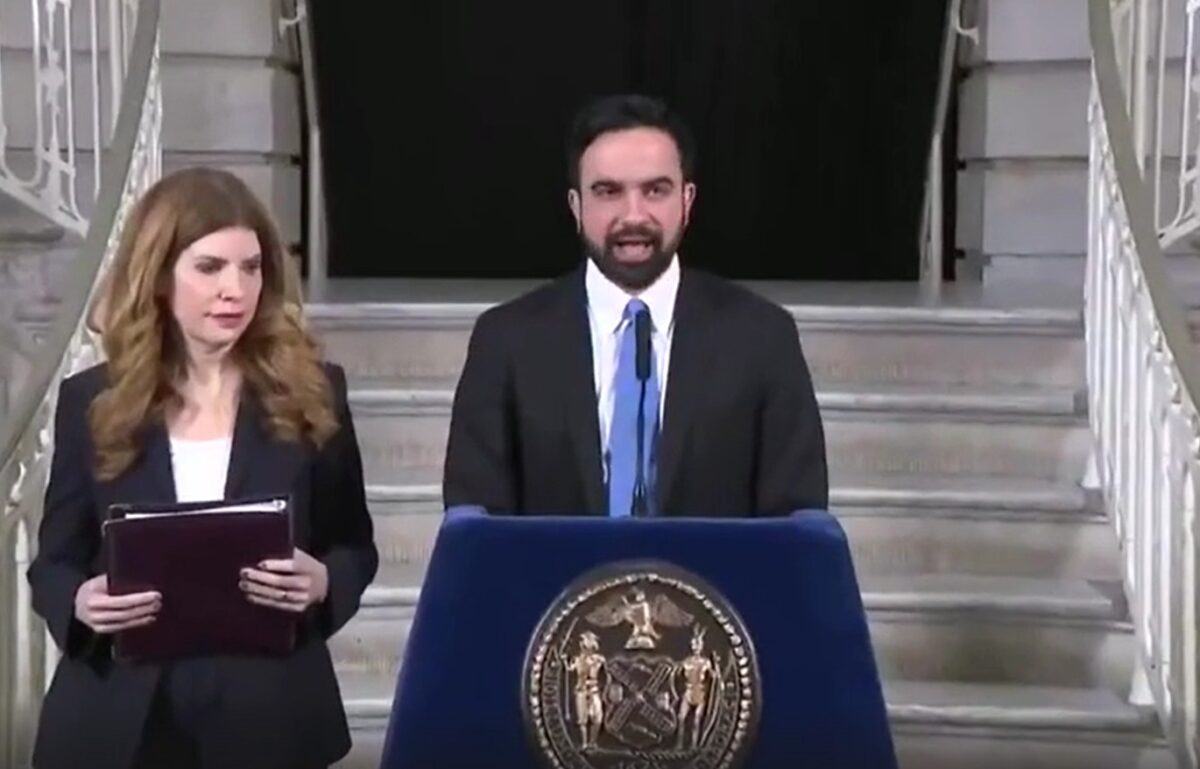

A New York judge has thrown a major roadblock in front of New York City Mayor Zohran Mamdani’s effort to impose a new tax on expensive second homes, temporarily halting the rollout after homeowners sued over what they described as a chaotic and legally flawed process.
Staten Island Supreme Court Justice Wayne Ozzi issued a temporary restraining order preventing the Mamdani administration from moving ahead with key parts of the so-called pied-à-terre tax program while the lawsuit proceeds.
For an administration that came into office promising to make wealthy property owners pay more, having the courts hit the brakes this early is hardly the victory lap City Hall envisioned.
The controversy centers on a surcharge targeting qualifying non-primary residences valued at more than $5 million. The problem, according to the homeowners challenging the rollout, was how the city determined who might actually owe it.
City officials initially published a database containing information on more than 900,000 homeowners who potentially could be affected. Mamdani had previously warned wealthy property owners to “check your mailbox when you’re back in the five boroughs, because you’ve got mail.”
https://twitter.com/MarioNawfal/status/2086939396545155526
That turned out to be considerably more complicated than a catchy political line.
Many homeowners were reportedly confused because numerous properties appearing on the enormous list seemingly did not meet the basic definition of an unoccupied second residence. The city subsequently mailed approximately 17,000 notices warning recipients that they could face the tax unless they applied for an exemption.
Three homeowners sued, arguing that the administration had effectively shifted the government’s responsibility onto ordinary property owners, forcing people to prove that their homes were actually their primary residences.
Attorney Randy Mastro hammered that point in court.
“The city screwed this up… got it wrong… stop the train and make them do it over,” Mastro told the court.
He argued that officials should have determined whether individual properties qualified as non-primary residences before placing homeowners into the surcharge process.
“The city is to bear the burden,” Mastro said. “They didn’t do their homework.”
Judge Ozzi’s temporary order blocks the administration from proceeding based on the disputed property roll and notices. It also prevents enforcement of deadlines against affected homeowners and restricts the city from assessing or collecting the surcharge against people identified through the challenged process without first making the individualized determination required under state law.
The order reportedly requires City Hall to remove the controversial list containing homeowners’ names, addresses and property values as well.
Critics have accused the administration of effectively doxxing property owners by publicly releasing the information.
“This is ludicrous. It is not right,” Mastro told the court.
The ruling does not permanently kill Mamdani’s pied-à-terre tax. The restraining order is temporary, with another hearing expected at the end of August. The underlying legal fight therefore remains very much alive.
Still, it represents an embarrassing setback for a mayor who made higher taxes on wealthy New Yorkers a prominent part of his political agenda.
Outside the courthouse, Mastro called the decision “a very good day for all New York City homeowners.”
There is also a broader lesson buried underneath the political fireworks. Even when politicians have the legal authority to collect a tax, government still has to follow the law when determining who actually owes it. Publishing an enormous list, sending thousands of notices and effectively telling homeowners to prove the government wrong is bound to attract scrutiny.
Mamdani may ultimately get another opportunity to pursue the tax. For now, however, the administration has been ordered to stop, sort out the mess and return to court.
Turns out “tax the rich” still requires doing the paperwork correctly.

Leave a Comment