

A federal judicial panel in Alabama just handed Democrats a major political victory while raising serious questions about whether lower courts are simply ignoring recent Supreme Court rulings they dislike. In a decision released Tuesday, a three-judge panel blocked Alabama from reinstating its previous congressional map and ordered the state to continue using the court-imposed districts created for the 2024 election cycle.
That means the state will keep using the controversial 5-2 map, which includes two Black-majority districts and gives Democrats a stronger chance at holding an additional congressional seat. Alabama had attempted to return to its earlier 6-1 Republican map after recent Supreme Court decisions appeared to crack down on race-based redistricting.
Apparently the lower court did not get the memo.
The ruling came in Alabama’s long-running redistricting battle, where left-leaning activist groups and attorneys representing Black voters argued the state’s prior maps discriminated against minority voters. The judges agreed and issued a preliminary injunction preventing Alabama from changing district lines again ahead of the midterm elections.
According to the Associated Press, the panel ruled Alabama must continue using the same court-ordered map used during the 2024 congressional races while litigation continues.
Naturally, supporters of the injunction framed the decision as necessary to protect minority voting rights. Critics, meanwhile, see something very different, namely federal judges openly embracing racial gerrymandering despite the Supreme Court’s increasing skepticism toward race-centered district maps.
The timing of the ruling is especially remarkable because the U.S. Supreme Court had recently cleared the way for Alabama to challenge and potentially discard the current map after a separate ruling involving Louisiana redistricting.
That Louisiana case, State of Louisiana v. Phillip Callais, became a major national flashpoint after lawmakers created a second majority-minority congressional district under pressure from activist groups and lower courts. The Supreme Court ultimately signaled discomfort with maps drawn predominantly around race, especially when political outcomes become the obvious objective.
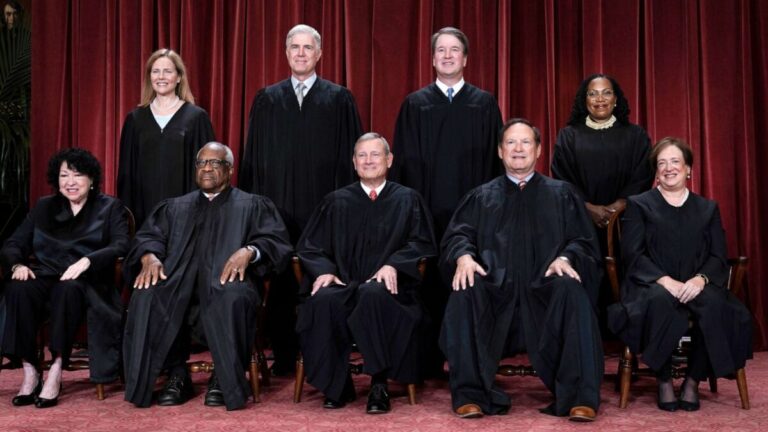
Even Justice Sonia Sotomayor’s furious dissent practically admitted how consequential the Court’s decision was. She blasted the majority for tossing aside the district court’s findings and warned of “confusion” surrounding future redistricting disputes.
Translation: the Court’s ruling disrupted the activist legal strategy Democrats have relied on for years.
Alabama Republicans believed the Supreme Court’s direction gave them an opening to restore the older map, which leaned heavily Republican and reflected the state’s broader voting patterns. Instead, the lower court panel essentially slammed the brakes and said not so fast.
This entire fight highlights the growing national battle over redistricting and whether race should remain a central factor in drawing congressional districts. Democrats argue minority representation requires heavily race-conscious maps. Republicans counter that race-based districting often becomes little more than partisan engineering disguised as civil rights enforcement.
The result is a legal and political mess where courts increasingly seem to issue contradictory rulings depending on which judges happen to hear the case. For voters trying to follow all this, it starts to resemble a game where the rules change every few months and somehow always right before an election.
One thing is certain: this Alabama battle is nowhere near finished, and the Supreme Court may soon find itself dragged back into the middle of the redistricting war whether it wants to or not.

Leave a Comment